





























Heinrich Safety Pyramid Theory PPT & Google Slides
Heinrich Pyramid Theory Template & Accident Triangle
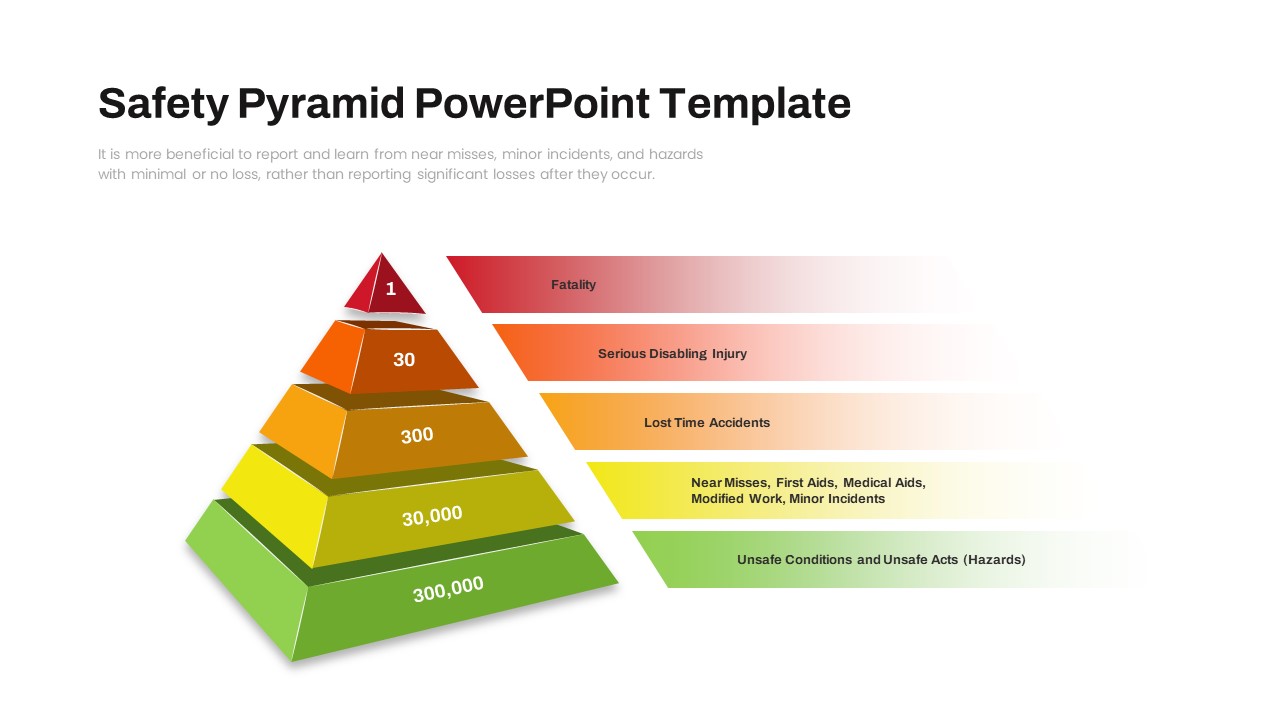
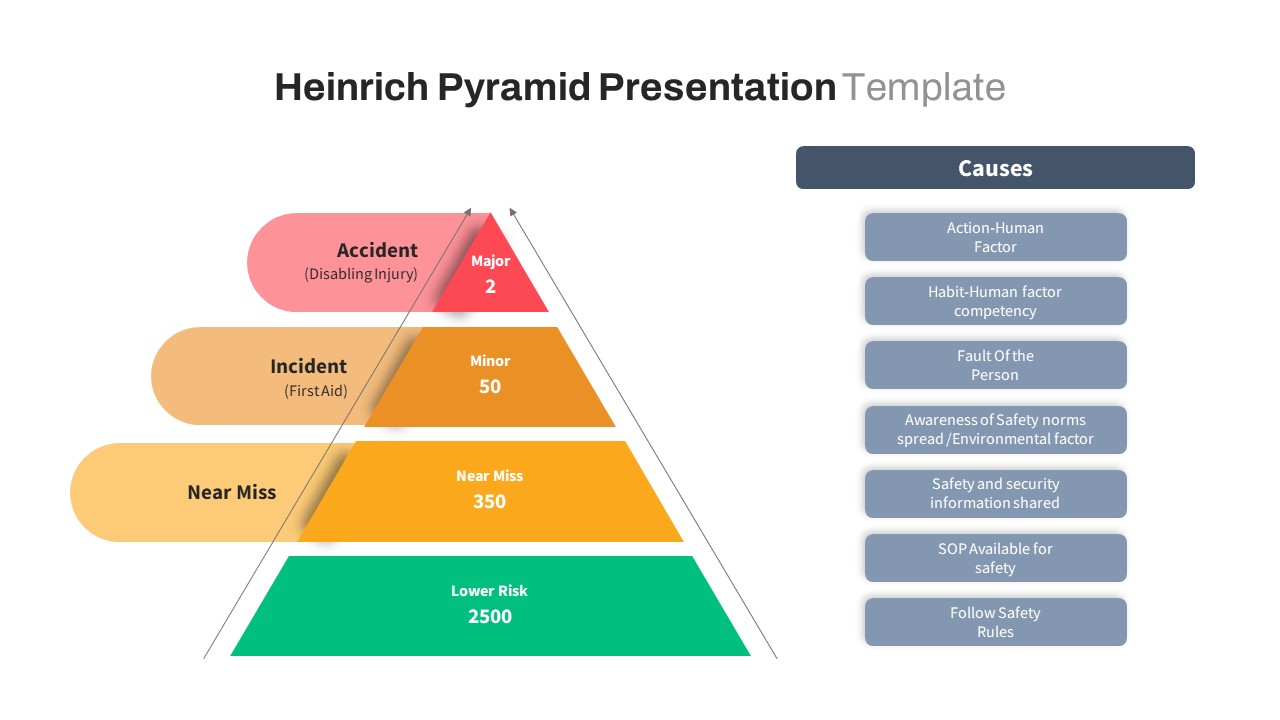
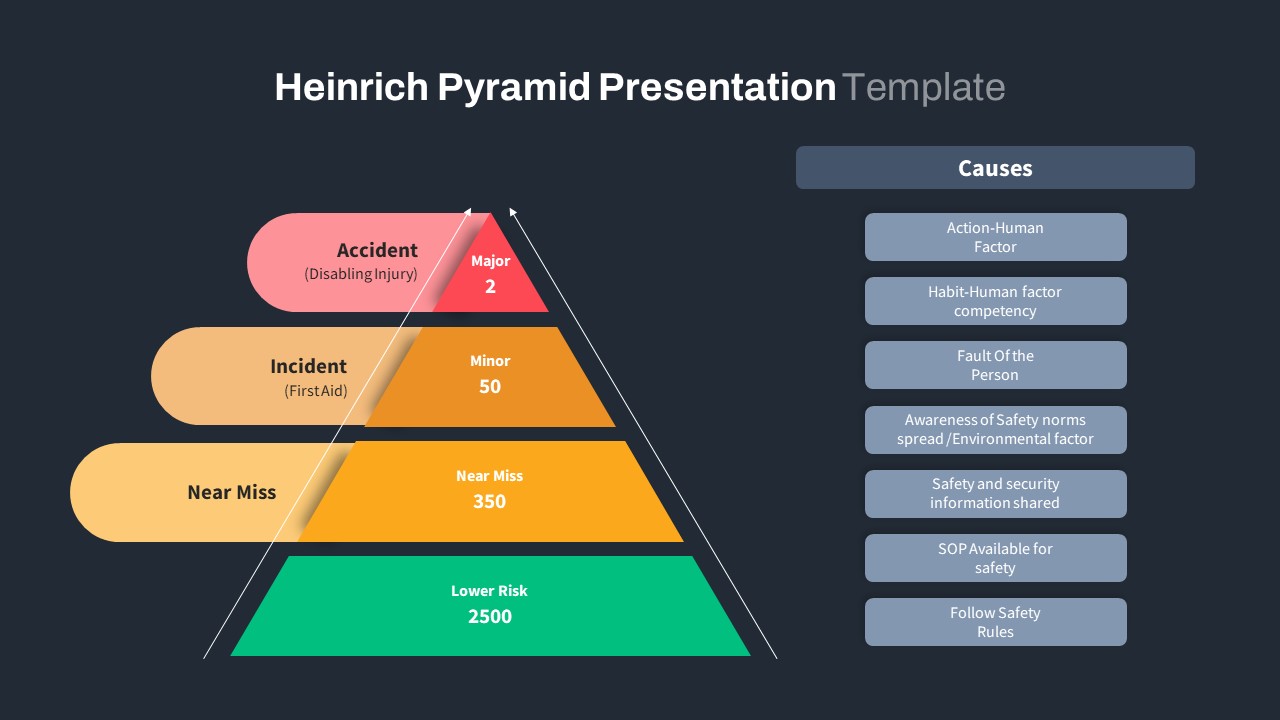
Presenting organizational risk statistics, workplace hazard classifications, or industrial incident prevention models requires an authoritative visual framework. This Heinrich Safety Pyramid Theory PPT template delivers a highly structured vector solution to illustrate the classic 300-29-1 accident ratio model. The safety pyramid infographic is a professional step concept framework designed to showcase inherent risk analysis and industrial accident mitigation strategies. Serving as an essential tool for Environment, Health, and Safety (EHS) managers, safety officers, and operations leads.
This comprehensive Heinrich pyramid template illustrates Herbert William Heinrich’s classic 1-29-300 accident ratio theory. This structural visual layout helps safety teams run effective site briefings, annual audits, and toolbox talks to underscore the deep correlation between unsafe acts, near misses, minor injuries, and major operational fatalities.
What is the Heinrich Safety Pyramid theory?
The Heinrich Safety Pyramid, also known as the Accident Triangle or Bird Triangle, is a foundational workplace safety concept proposed by Herbert William Heinrich in 1931. The theory states that a predictable relationship exists between serious accidents, minor injuries, and near misses. Specifically, his data showed that for every 1 major disabling injury, there are 29 minor injuries and 300 near misses stemming from unsafe acts.
Where to Use this Heinrich Pyramid Theory Template
- Workplace Safety Onboarding Seminars: Use the tiered triangular charts to explain the critical importance of documenting near-miss behaviors to new facility employees clearly.
- Corporate EHS Compliance Briefings: Provide executive leadership and insurance steerage committees with a clear, standardized analysis of recent company health performance data.
- Industrial Risk Mitigation Workshops: Leverage the integrated fishbone alternatives and incident timelines to execute a systematic root-cause review of facility operations.
Download this Heinrich’s triangle template today to eliminate formatting bugs and deliver a polished risk management presentation to your steering committee.
Login to download this file

Item ID
SB04150


Related Templates

Safety Pyramid PowerPoint Template
Risk Management
Theory X & Theory Y Template for PowerPoint
Comparison
McGregor’s Theory X and Theory Y Template
Business Strategy
McGregor’s Theory X And Theory Y Slide
Comparison
Safety Helmet Infographics Template for PowerPoint & Google Slides
Infographics
Free Safety PowerPoint Template
Pitch Deck
Free
HACCP Food Safety Diagram Template for PowerPoint & Google Slides
Process
Work Safety PowerPoint Template
Risk Management
Workplace Safety Presentation Template
HR
Taylor’s Scientific Management Theory PPT & Google Slides
Process
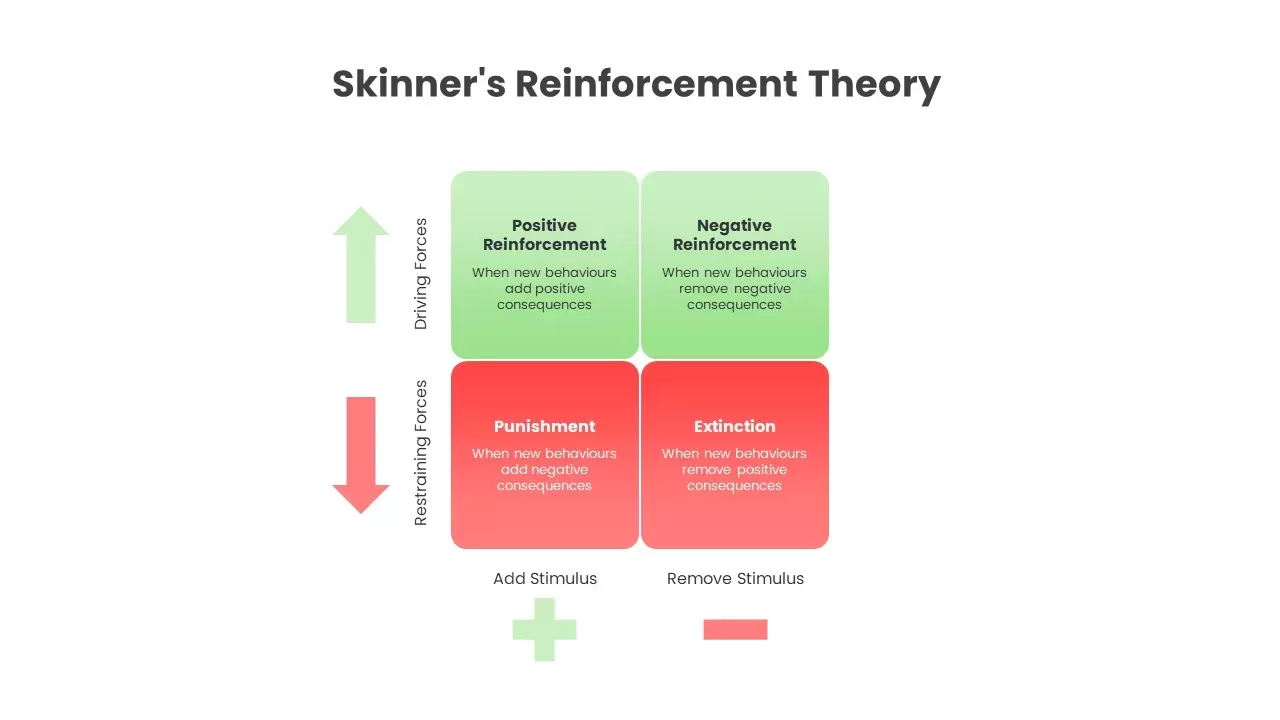
Skinner’s Reinforcement Theory PPT & Google Slides
Comparison

Theory Of Change Template PPT Slide
Process
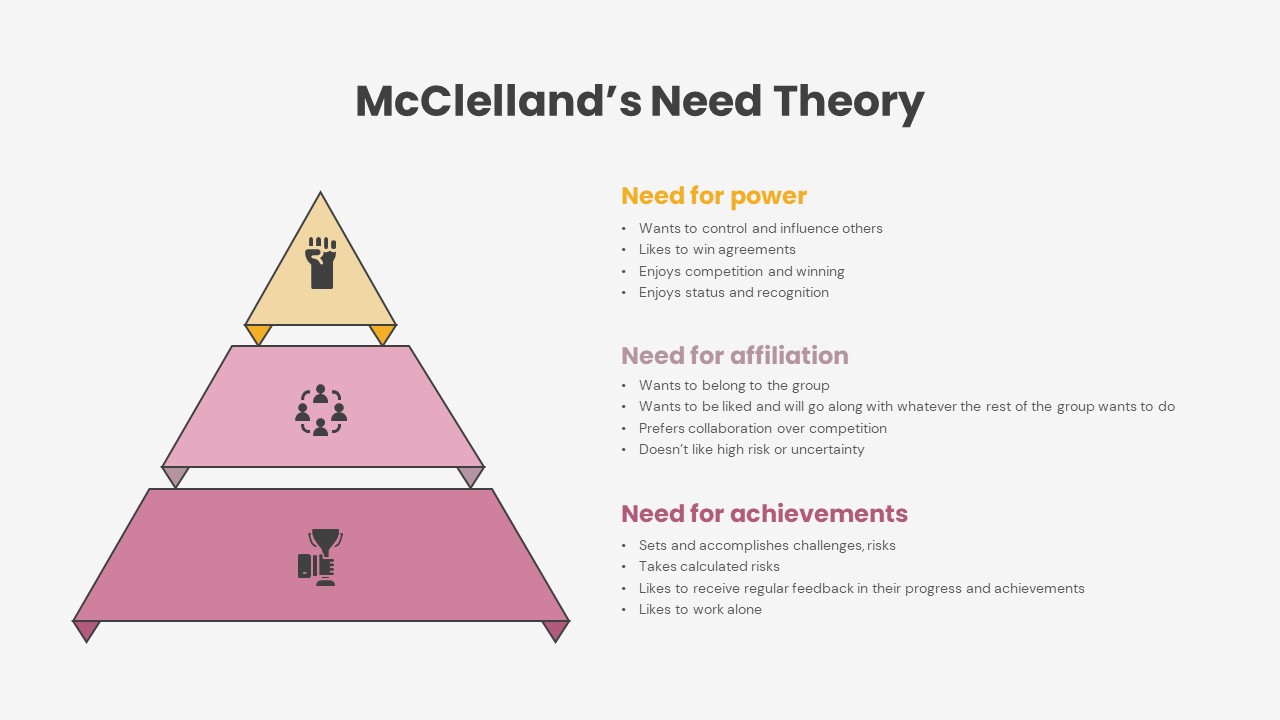
McClelland’s Need Theory PPT Presentation Template
Pyramid
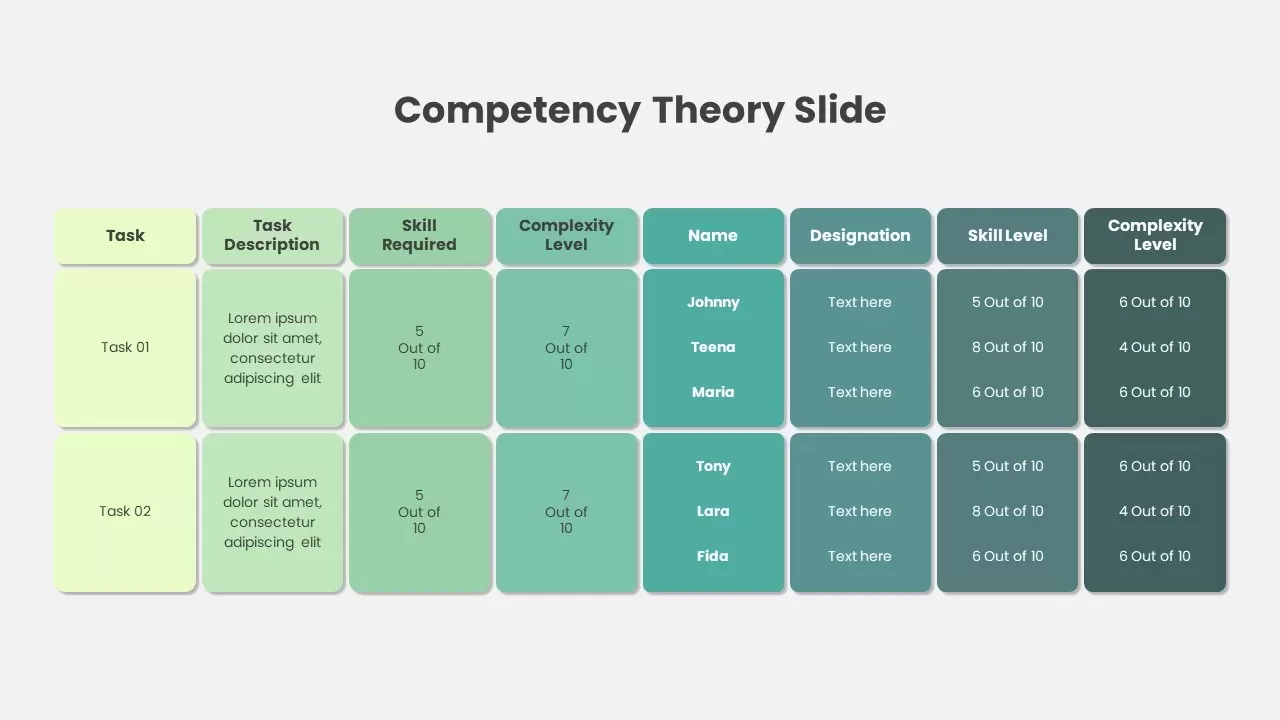
Competency Theory Slide for PowerPoint & Google Slides
Employee Performance
Incentive Theory of Motivation Diagram Template for PowerPoint & Google Slides
Employee Performance
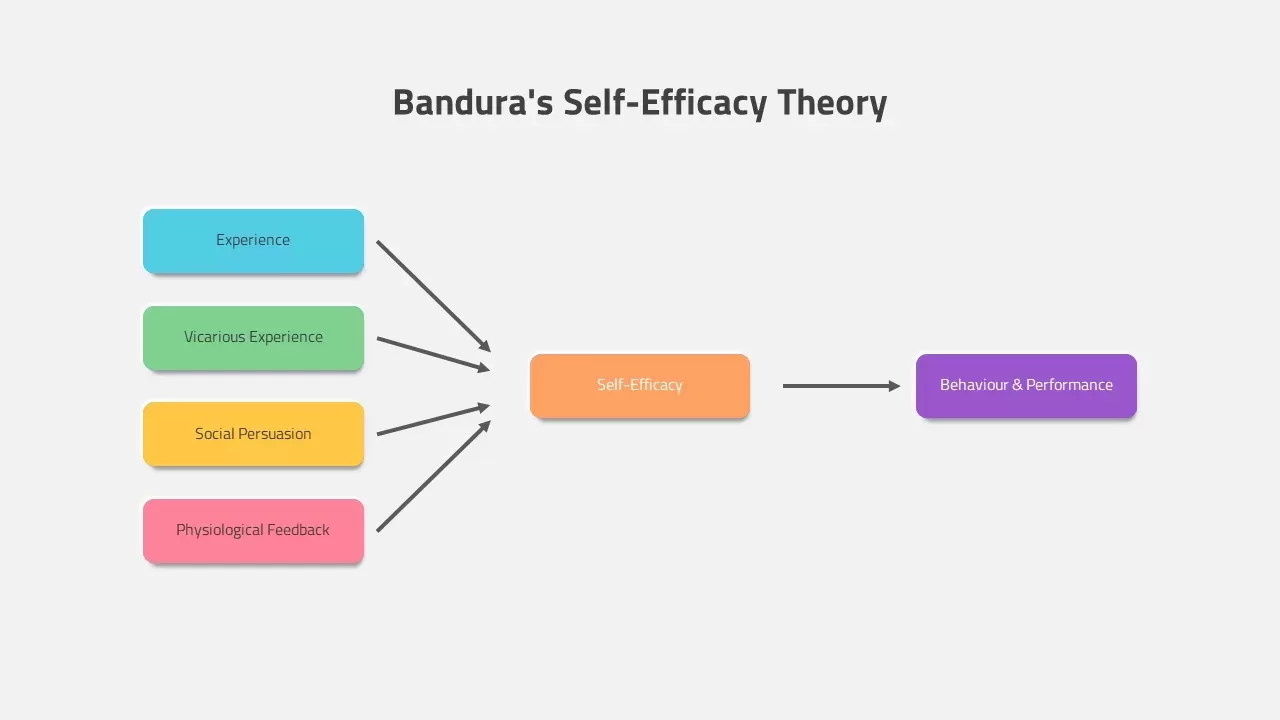
Bandura’s Self-Efficacy Theory Template for PowerPoint & Google Slides
Process
Social Learning Theory PowerPoint Template and Google Slides
Circular
Empirical Process Control PowerPoint Template
Circular
Complexity Leadership Theory Overview Template for PowerPoint & Google Slides
Leadership
Queuing Theory System Flow Diagram Template
Process