











NIST Cybersecurity Framework Template
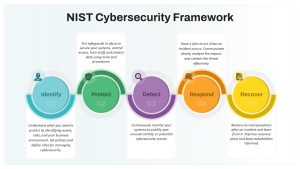
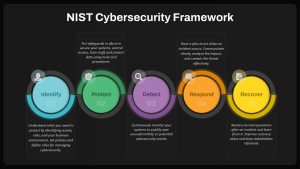
Cybersecurity Risk Management and Incident Response Framework
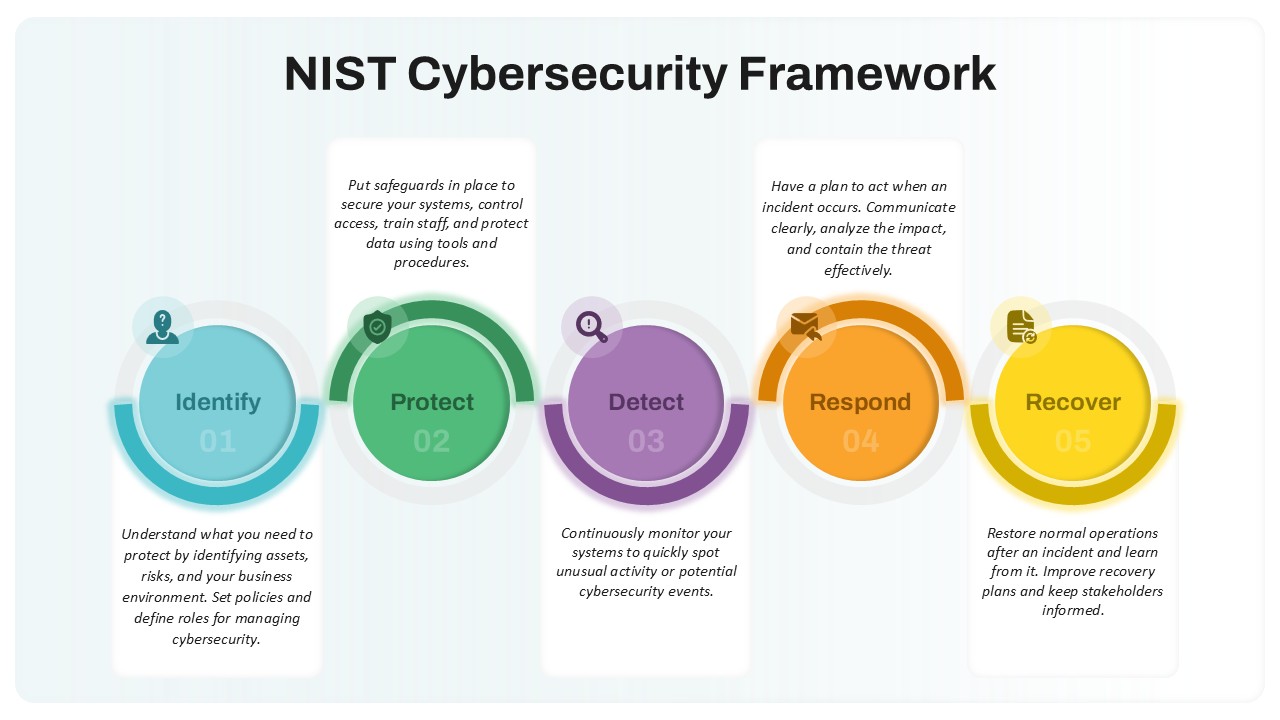
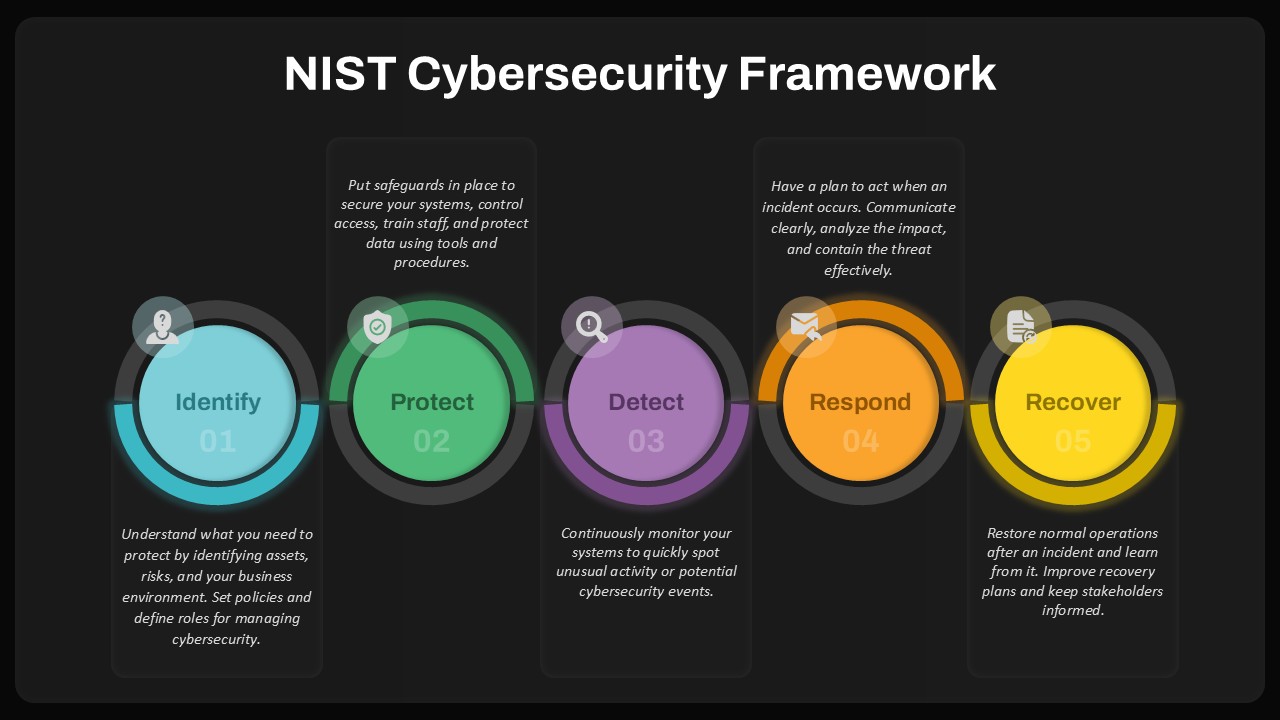
The NIST Cybersecurity Framework Template provides a professional and visually structured approach to presenting cybersecurity strategies, risk management processes, and organizational security initiatives. Centered around the five core NIST functions—Identify, Protect, Detect, Respond, and Recover—this template helps teams explain how cybersecurity risks are managed throughout their lifecycle, from prevention and monitoring to incident response and recovery.
Featuring a color-coded process layout and intuitive visual elements, this slide transforms complex cybersecurity concepts into an easy-to-understand framework for both technical and non-technical audiences. It is ideal for communicating security priorities, compliance efforts, operational resilience strategies, and cybersecurity best practices in executive meetings, training sessions, audits, and stakeholder presentations.
Why This NIST Cybersecurity Framework Template Stands Out
- • Simplifies Complex Security Processes – Presents the five NIST framework functions in a clear sequence, making cybersecurity workflows easier to understand and communicate.
- • Strengthens Cybersecurity Communication – Helps organizations explain security controls, risk mitigation strategies, incident response procedures, and recovery plans with greater clarity.
- • Supports Compliance and Governance Discussions – Provides a structured framework for presenting cybersecurity policies, regulatory requirements, and organizational security objectives.
- • Enhances Presentation Engagement – Uses distinct colors, icons, and concise descriptions to improve audience understanding and information retention.
Practical Applications of This NIST Cybersecurity Framework Template
- • Cybersecurity Strategy Presentations – Showcase security programs, risk management initiatives, and long-term cybersecurity roadmaps.
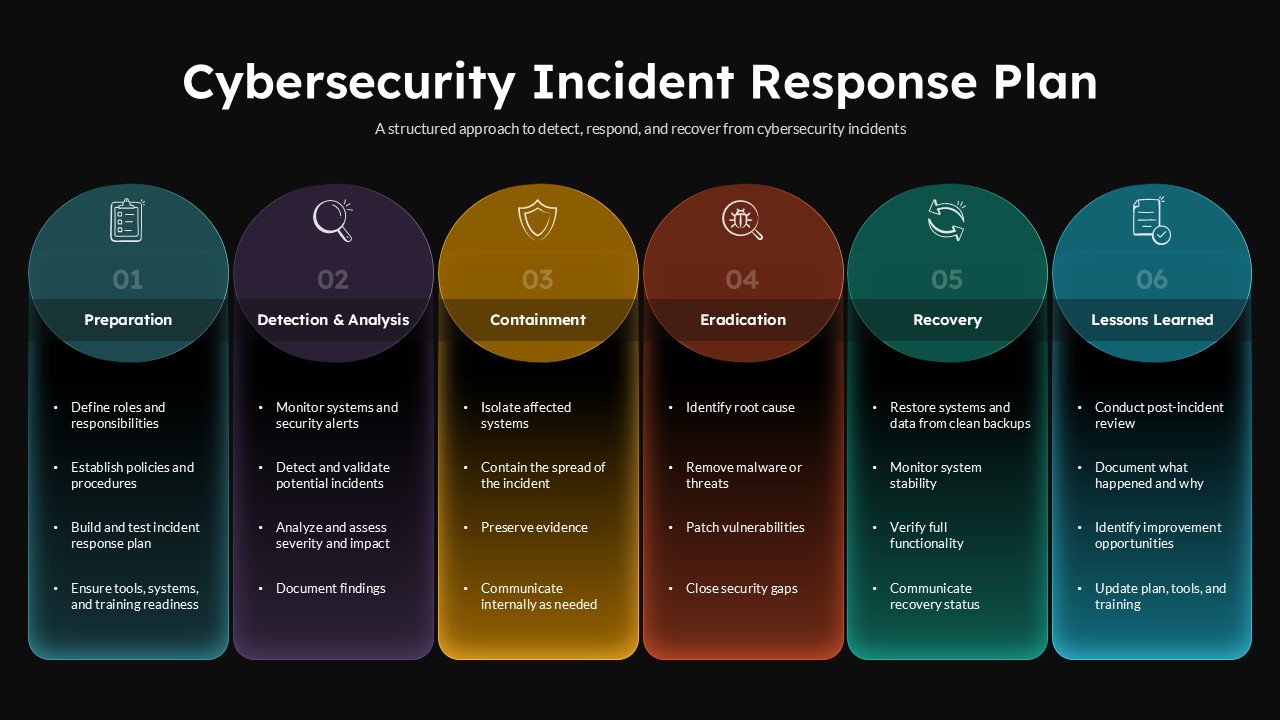
- • Incident Response Planning – Illustrate the processes involved in identifying threats, responding to incidents, and restoring operations.
- • Compliance and Audit Reviews – Support discussions related to cybersecurity standards, regulatory compliance, and security assessments.
- • Business Continuity Planning – Demonstrate how organizations prepare for, respond to, and recover from disruptive cyber events.
- • Security Awareness and Training Programs – Educate employees and stakeholders on cybersecurity responsibilities and best practices.
- • Consulting and Client Advisory Engagements – Provide a professional framework for communicating cybersecurity recommendations and risk management strategies.
Login to download this file

Item ID
SB05101


Related Templates

Cybersecurity Presentation Template
Company Profile

Cybersecurity Theme Presentation Template
Technology
Cybersecurity Defense-in-Depth PowerPoint Template
Technology
Computer Science Template for Technology, Programming & Cybersecurity Presentations
Information Technology

Cybersecurity Strategy PowerPoint Presentation Template
Pitch Deck
Cybersecurity Incident Response Plan PowerPoint Template
Information Technology
Cybersecurity Timeline Roadmap Slide for PowerPoint & Google Slides
Information Technology
Customer Acquisition Framework Template for PowerPoint
Funnel
VRIO Analysis Framework template for PowerPoint & Google Slides
Business Strategy
8Ps of Marketing Framework Template
Marketing
Shield Infographics Four-Part Framework Template for PowerPoint & Google Slides
Process
Offshoring Strategy Framework PowerPoint Template
Business Strategy
Quality Control Presentation Template and QA Framework Slides
Process
Split Framework PowerPoint Template
Process
Value Creation Framework PowerPoint Template
Business Plan
Operational Excellence Framework Template for PowerPoint & Google Slides
Business Strategy
VALS Segmentation Framework Diagram Template for PowerPoint & Google Slides
Marketing
Continuous Innovation Framework PowerPoint Template
Circular
HR Excellence Five Pillar Framework Template for PowerPoint & Google Slides
Business Models
Corporate Governance Framework PowerPoint Template
Process