


























Manufacturing Process Flow Template for PowerPoint
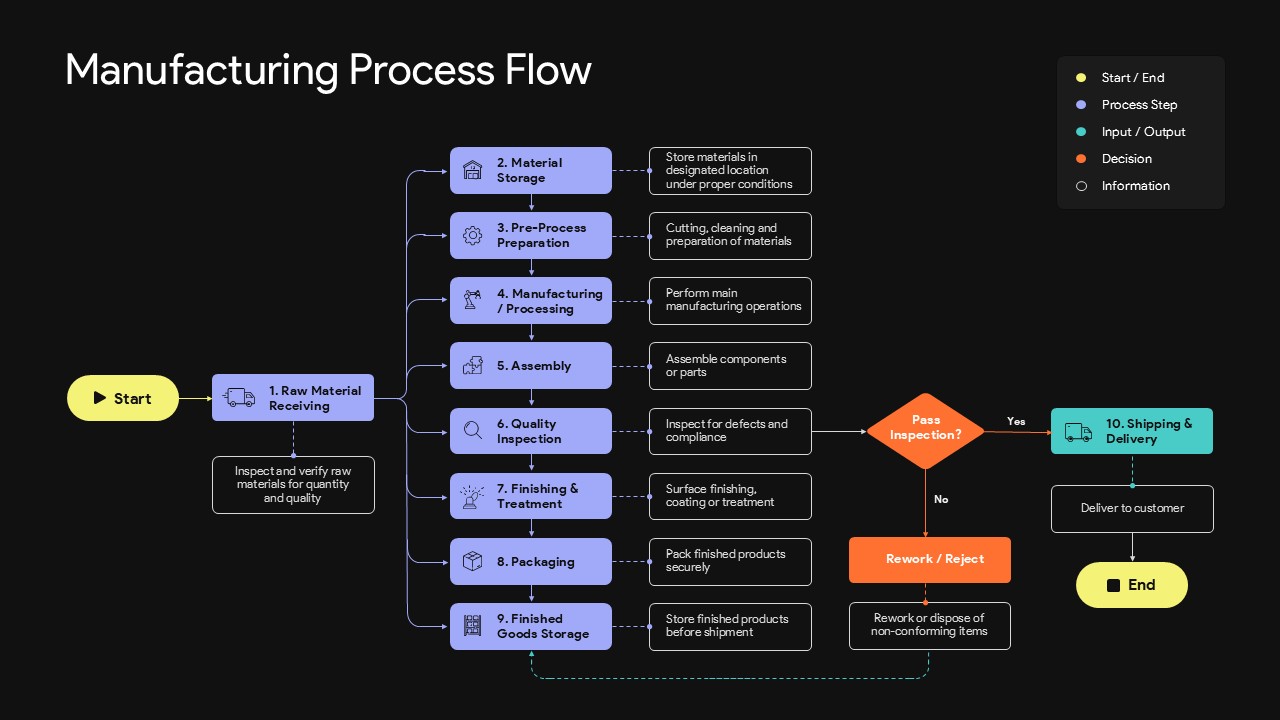
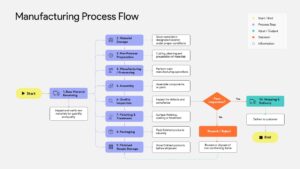
A manufacturing process flow is a step-by-step map of how raw materials move through receiving, production, quality checks, and shipping to become a finished product ready for delivery. This Manufacturing Process Flow PowerPoint Template turns that map into a full flowchart diagram on a black background, using color-coded shapes and a legend, purple for process steps, teal for input/output, orange for decision points, and yellow for start and end, so viewers can read the entire production cycle at a glance.
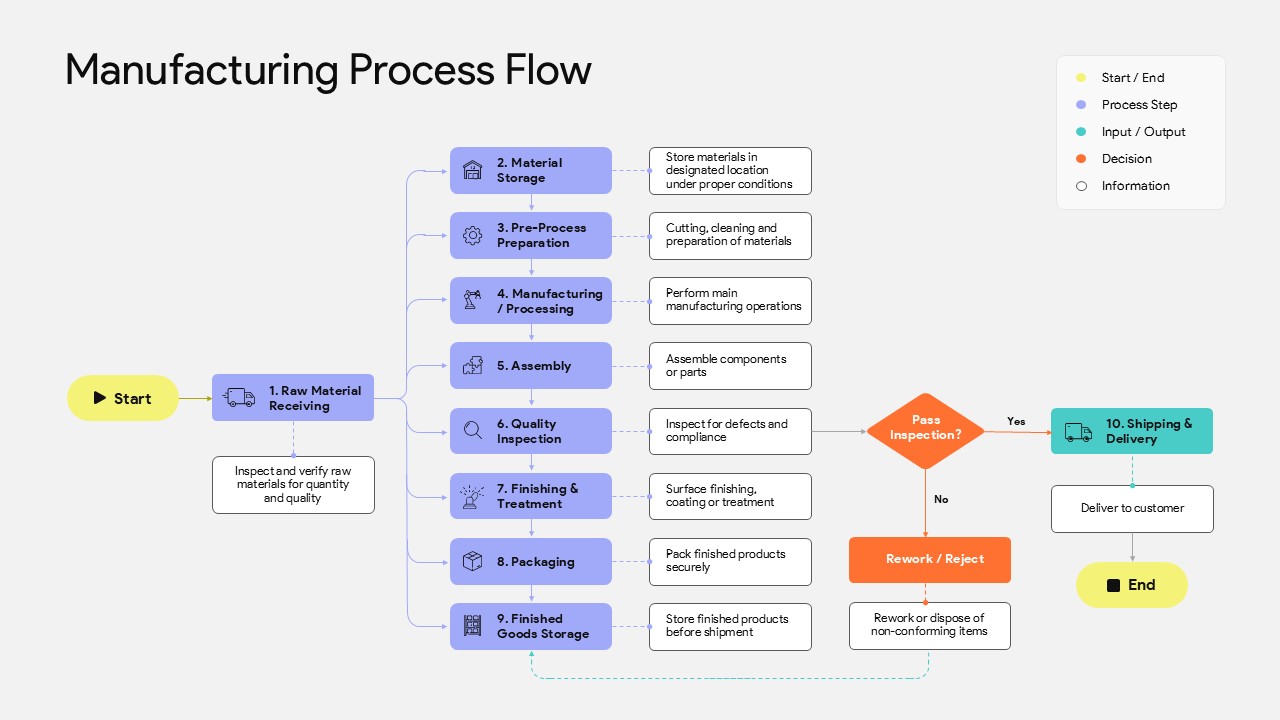
The flow begins with a yellow Start node leading into Raw Material Receiving, then branches upward through eight sequential purple process steps: Material Storage, Pre-Process Preparation, Manufacturing/Processing, Assembly, Quality Inspection, Finishing & Treatment, Packaging, and Finished Goods Storage. Each purple box connects to a white annotation panel on its right describing the specific action taken at that stage, such as cutting and cleaning during Pre-Process Preparation or surface coating during Finishing & Treatment. After Quality Inspection, the diagram routes into an orange Pass Inspection decision diamond, splitting into a Yes path that leads to Shipping & Delivery and a teal End node, and a No path that routes to a Rework/Reject box before looping back into the main production flow.
Operations managers can use this template to document a factory’s standard operating procedure for training new floor staff or presenting to auditors during a compliance review. Manufacturing consultants can adapt the same flowchart structure for a client’s specific production line by relabeling the process steps, since the shapes, connectors, and legend are all built as separate PowerPoint objects rather than a flattened image. The color legend in the top right makes the diagram self-explanatory even without narration, which suits both live presentations and standalone reference documents.
Download and edit this Manufacturing Process Flow PowerPoint Template for your next operations or quality management presentation.
Frequently Asked Questions
How do you create a manufacturing process flow diagram?
What are the main stages in a typical manufacturing process flow?
Login to download this file

Item ID
SB06146Designed By
Athira


Related Templates

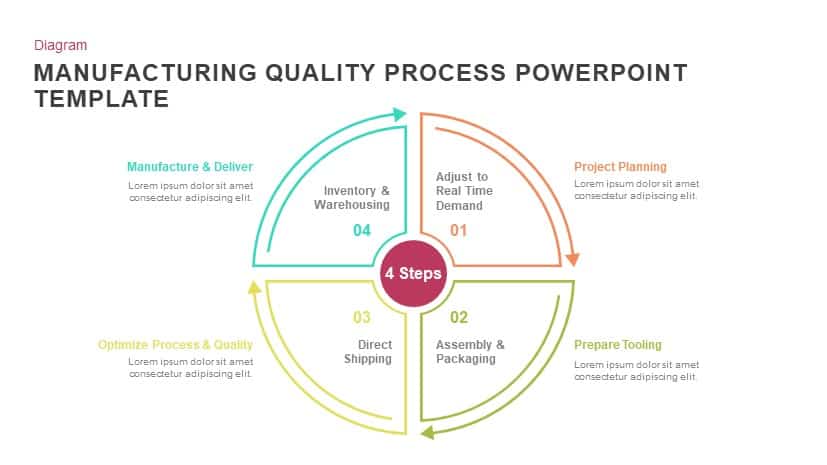
Manufacturing Quality Process PowerPoint Template and Google Slides
Process

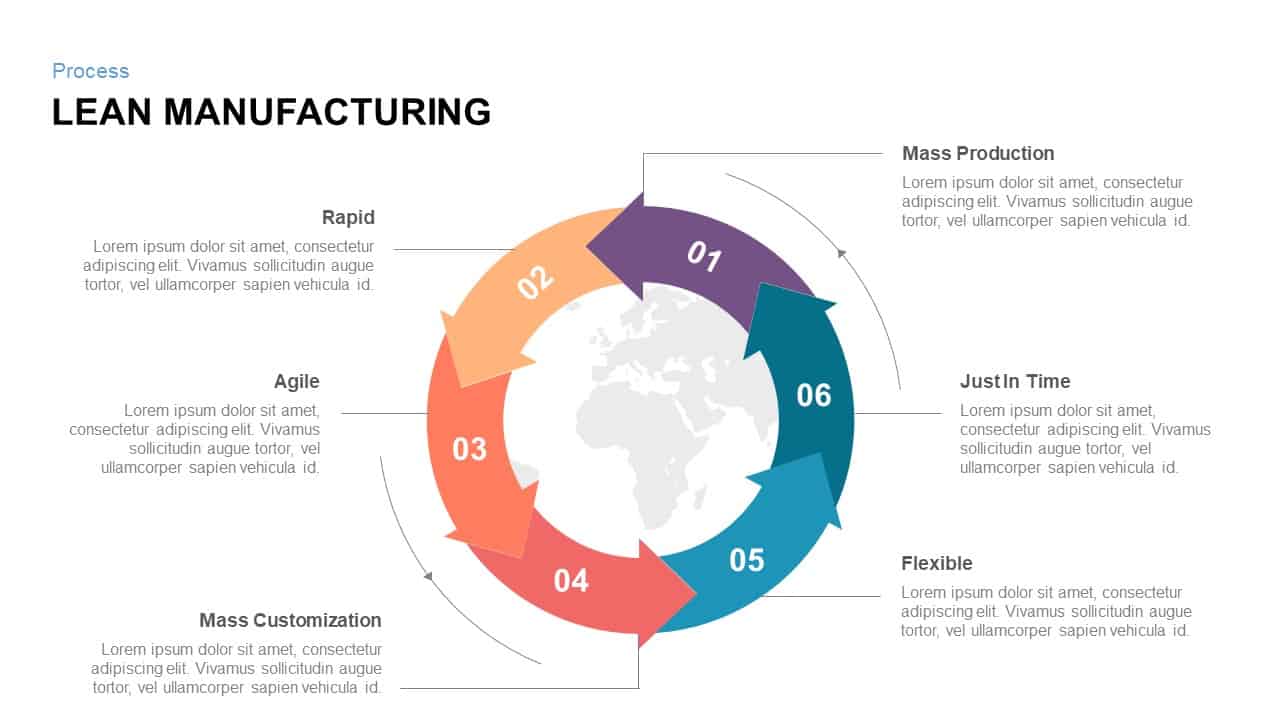
Six-Step Lean Manufacturing Process Template for PowerPoint & Google Slides
Process
Manufacturing Warehouse Conveyor PowerPoint Template
Process
Manufacturing PowerPoint Presentation Template
Business
Workflow Diagrams PowerPoint Template
Flow Charts
AI in Manufacturing Template for PPT & Google Slides Themes
Business
Manufacturing and Construction PowerPoint Presentation Template
Company Profile
Manufacturing And Automation Presentation Template
Company Profile

10 Stages Business Flow Process Diagram Template for PowerPoint
Business
4 Stage Linear Process Flow Diagram PowerPoint Template
Process
5 Stage Linear Process Flow Diagram Template for PowerPoint
Process
Isometric Five-Stage Process Flow Template for PowerPoint & Google Slides
Process
Minimal Process Flow Diagram Infographic Template for PowerPoint & Google Slides
Process
Free Process Flow Infographics Template for PPT & Google Slides Template
Process
Free
Circle Arrows Process Flow template for PowerPoint & Google Slides
Process
Curved Arrow Process Flow template for PowerPoint & Google Slides
Process
Conveyor Belt Infographic Process Flow Template for PowerPoint & Google Slides
Process
Chevron Process Flow PowerPoint Template
Arrow
Goal-Setting PowerPoint Template
Goals
Consent Management PowerPoint Template
Process