













Action Tracker Table Template
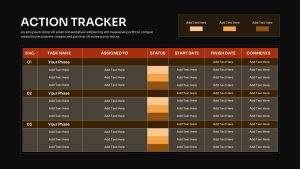
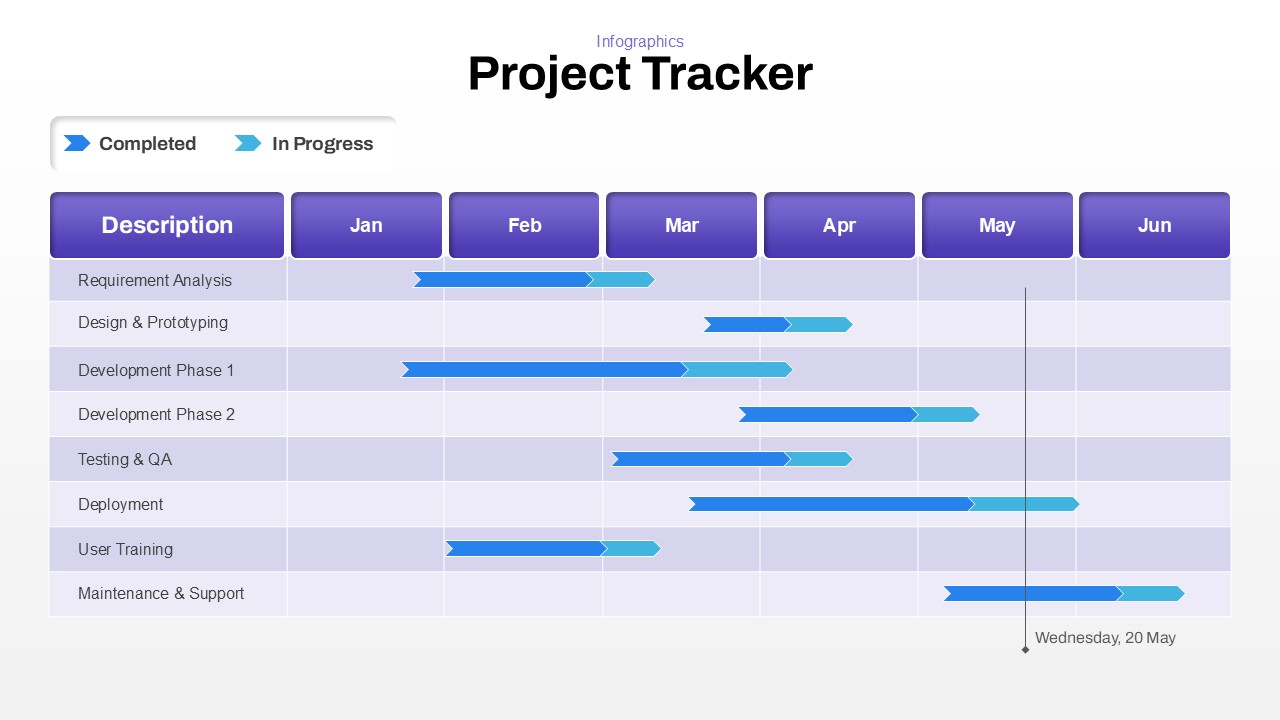
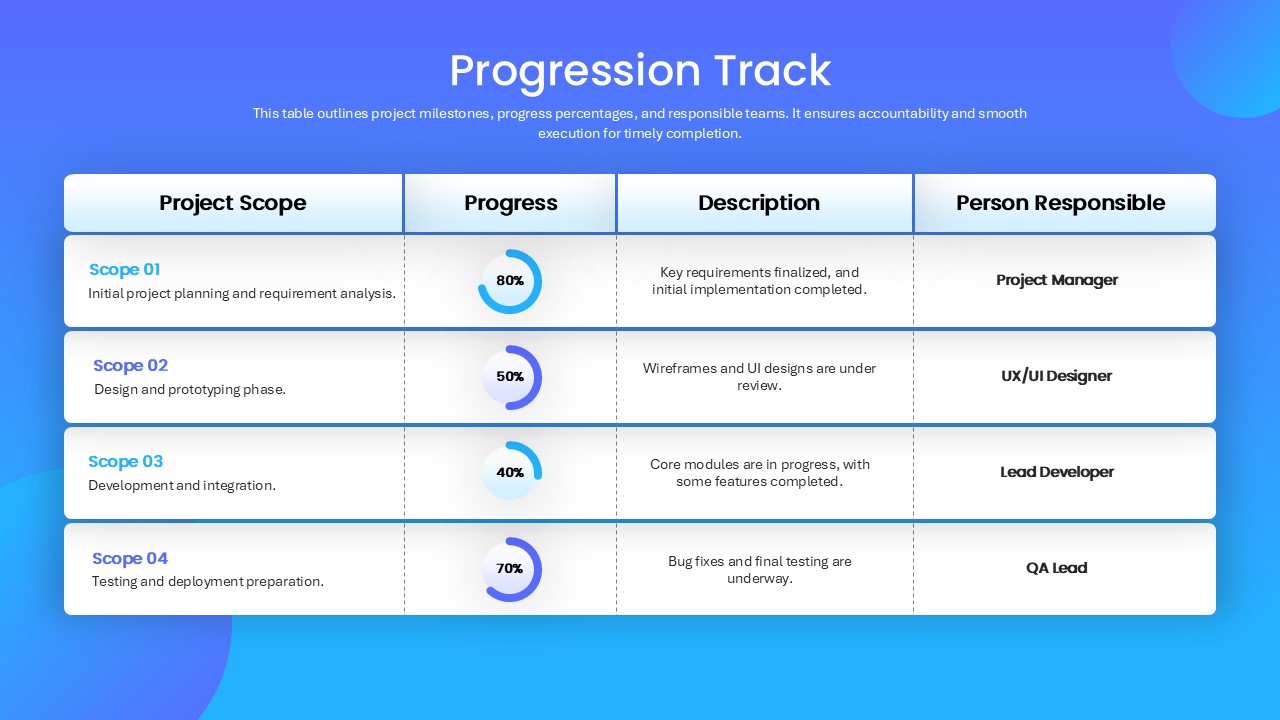
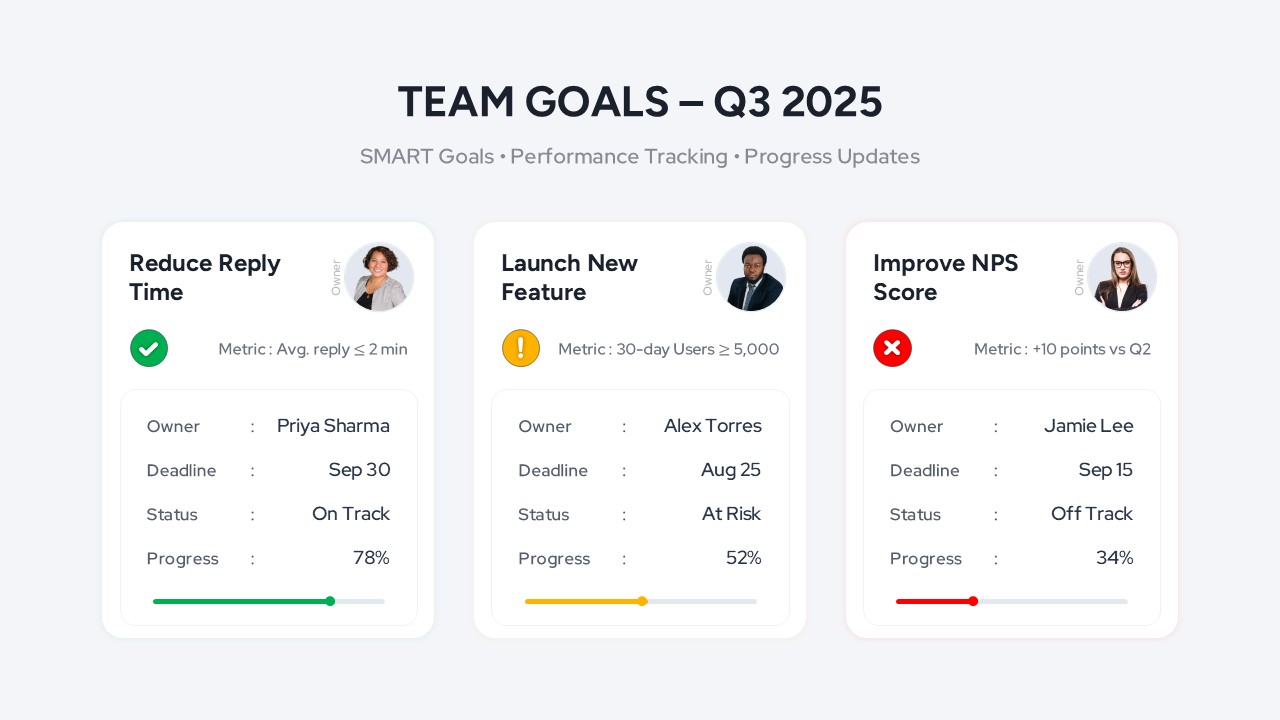
Most projects don’t fail because the plan was wrong, they fail because nobody could actually see where things stood on any given day. Tasks get assigned in one meeting, updates happen over email, and by the time a status review comes around, half the room is working from outdated information. This action tracker table exists to close that gap, giving every task, owner, and status update one shared, visible home instead of letting progress scatter across different tools and conversations.
How the table is structured
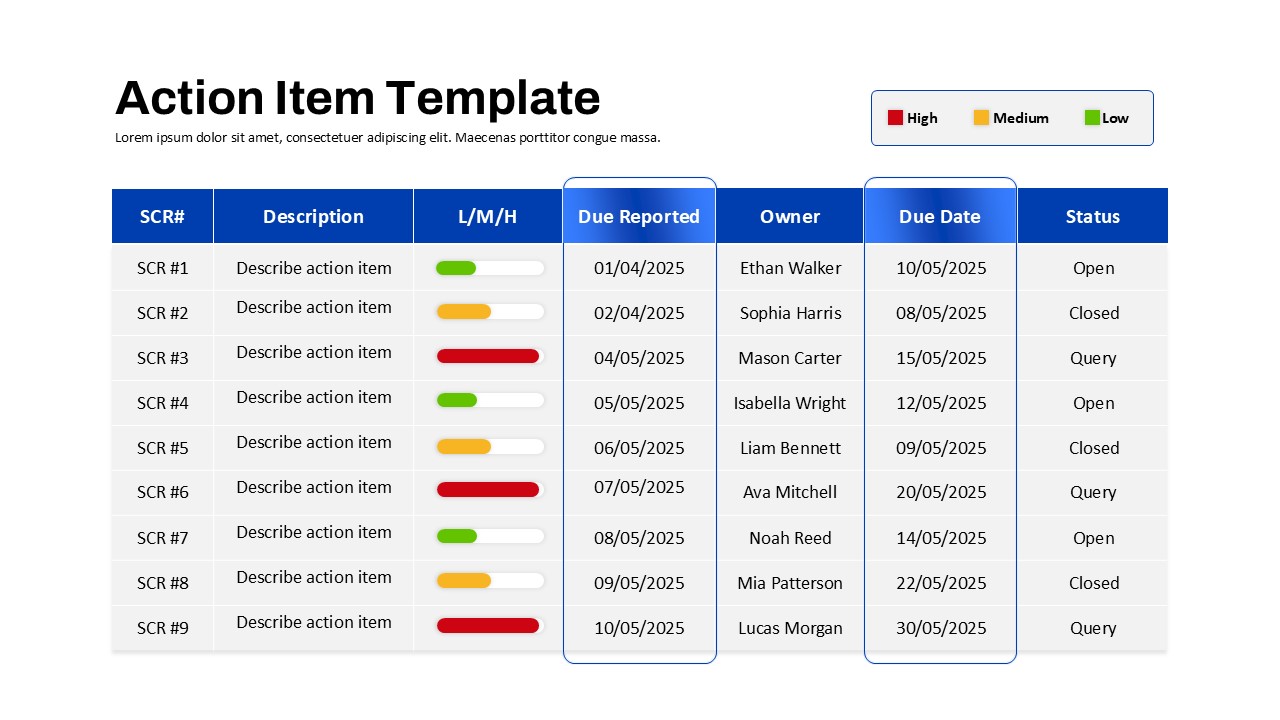
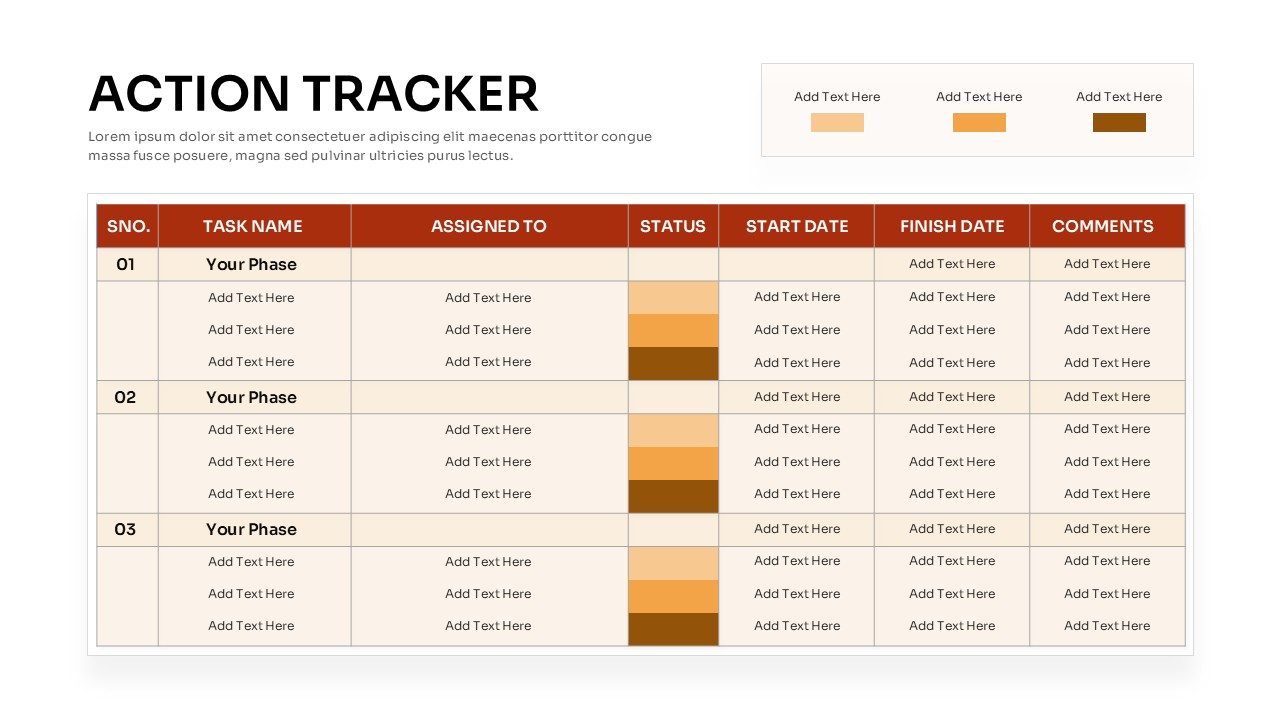
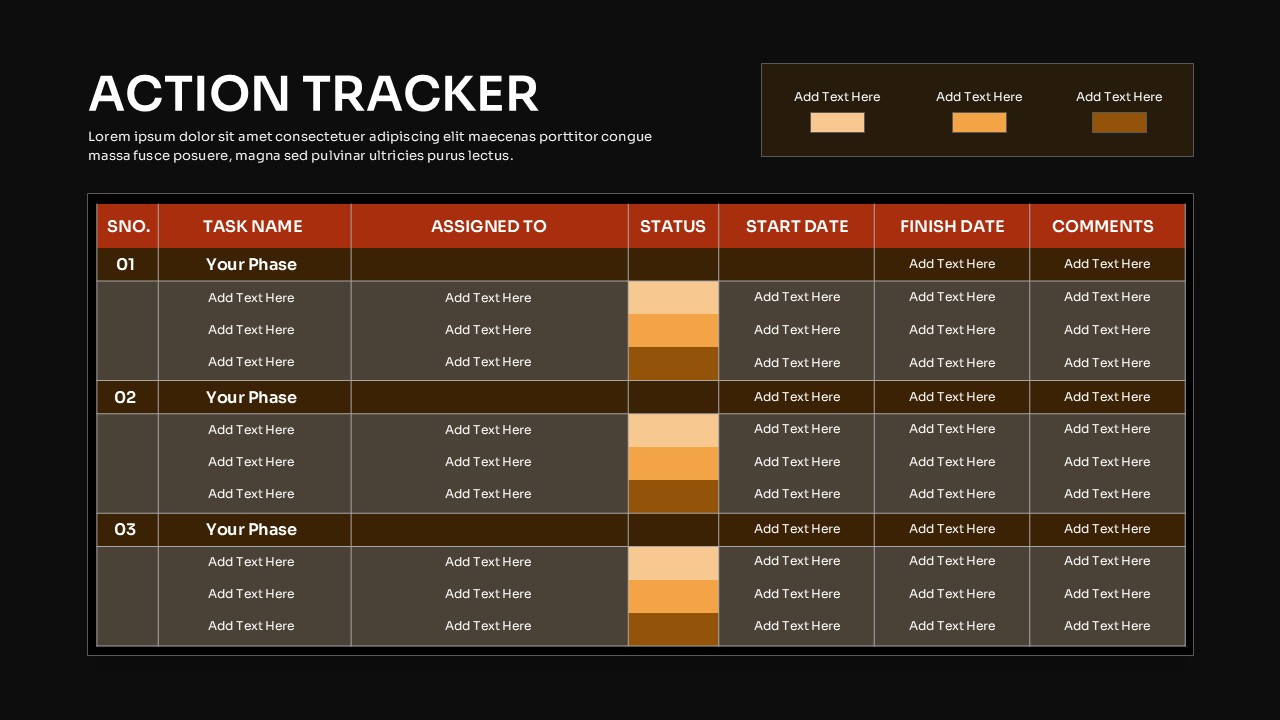
The layout tracks six key pieces of information for every task: the project phase it belongs to, a short task description, the assignee responsible for it, a status indicator, start and finish dates, and a comments field for any additional context. A bold burnt-orange header row separates these columns clearly at a glance, and alternating beige row backgrounds keep a longer list of tasks easy to read without the table feeling flat or repetitive. The status column does a lot of the visual work here, using three distinct shades, light orange, medium orange, and dark brown, to represent different stages of progress. A matching legend sits in the top right corner of the slide, so anyone reviewing the tracker understands what each color represents without needing a verbal explanation during the meeting. Clean sans-serif type and a plain white background keep the whole table feeling professional and easy to read, whether it’s projected during a live status update or printed as a handout for a team to reference later.
Editing and everyday use
None of this requires starting from scratch each time a new project begins. Every cell, legend swatch, and text placeholder stays editable, so a team can adjust the column headers, add or remove rows as the task list grows or shrinks, or recolor the status indicators to match a different priority system entirely. That flexibility matters because not every team tracks status the same way, some prefer a simple three-tier system like this one, while others might want to expand it into more granular stages.
Project managers and PMO offices use this action tracker table most consistently, relying on it to monitor task assignments, capture status updates, and keep stakeholders aligned during hand-offs between project phases. Operations teams use the same layout to track ongoing work across departments, particularly in situations where multiple teams are contributing to overlapping deliverables and need one shared reference point rather than five separate spreadsheets.
Beyond standard project tracking, this table adapts easily to other structured tracking needs. Teams use the same layout for meeting agendas, listing out discussion points alongside owners and follow-up actions. Risk management teams repurpose it as a risk log, swapping the status legend to reflect risk severity instead of task progress. Auditors use a similar structure for compliance checklists, and training coordinators adapt it to track course completion across a team. Whichever direction it’s used, the table performs the same way in both PowerPoint and Google Slides, keeping formatting consistent no matter which platform a team happens to be working in.
Login to download this file

Item ID
SB04892


Related Templates

Project Tracker Timeline Gantt Chart Template for PowerPoint & Google Slides
Project Status
Progress Tracker PowerPoint Template
Project Status
Team Goals Tracker Template for PowerPoint & Google Slides
Employee Performance
Action Items PowerPoint Template
Project Status
100-Day Action Plan PowerPoint Template
Business Plan
Action Plan PowerPoint Slides Template
Business
30 60 90 Plan of Action Template
Infographics
30 60 90 Day Action Plan Infographic Template for PowerPoint & Google Slides
Timeline
30 60 90 Plan of Action PowerPoint Template
Timeline
After Action Review Report Template PPT And Google Slides
Process
Action Plan Timeline Template for PowerPoint & Google Slides
Timeline
Free Action Plan Template for PowerPoint & Google Slides
Infographics
Free
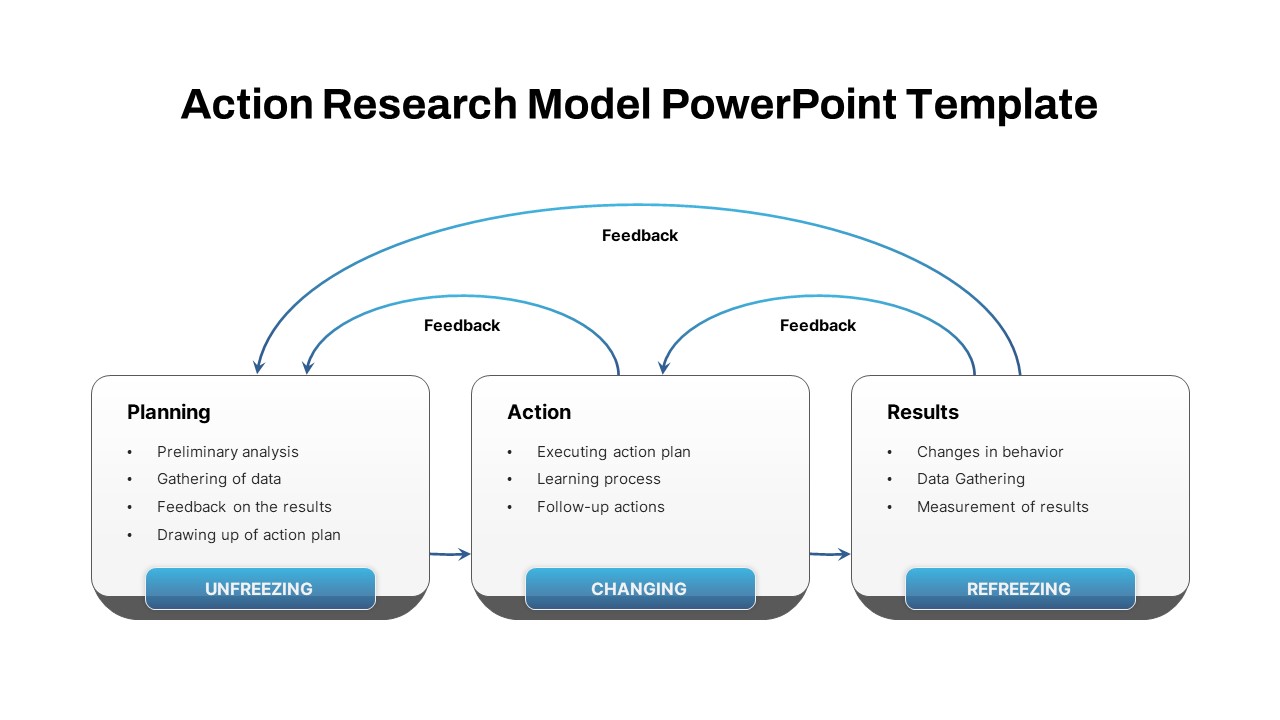
Action Research Feedback Process Model Template for PowerPoint & Google Slides
Process
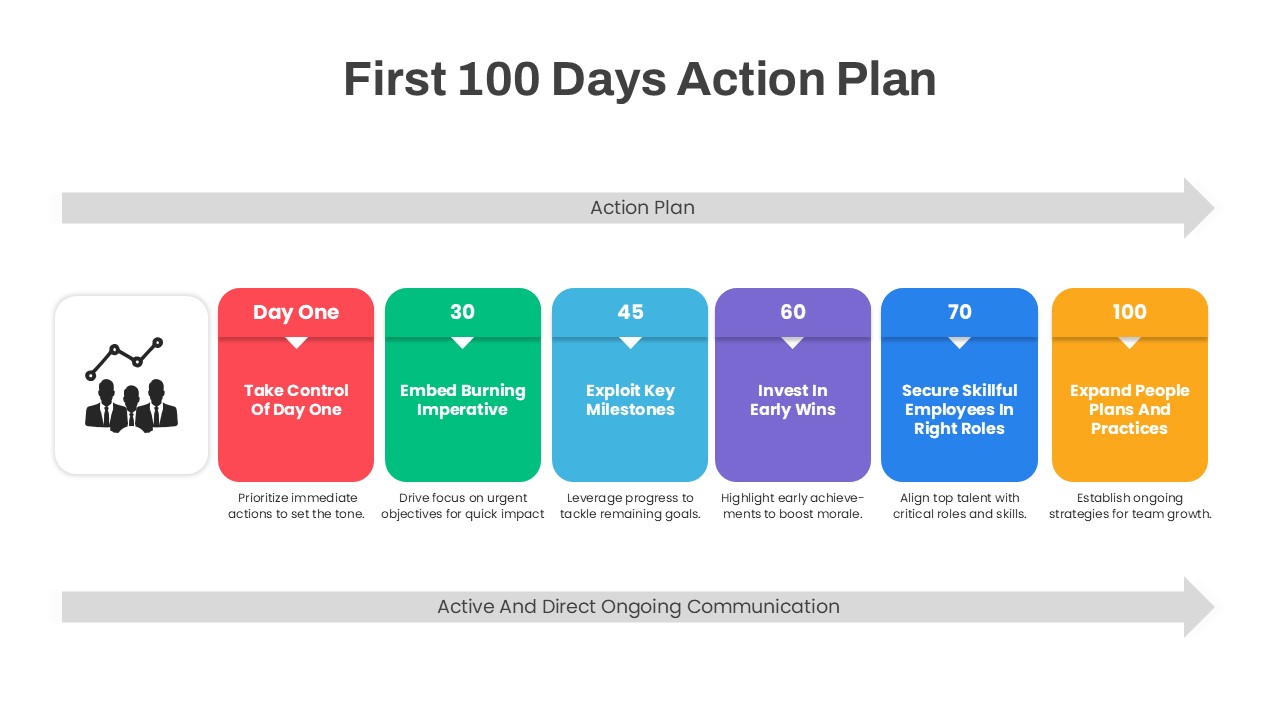
First 100 Days Action Plan PowerPoint Template
Timeline
Call to Action Template for PowerPoint & Google Slides
Marketing
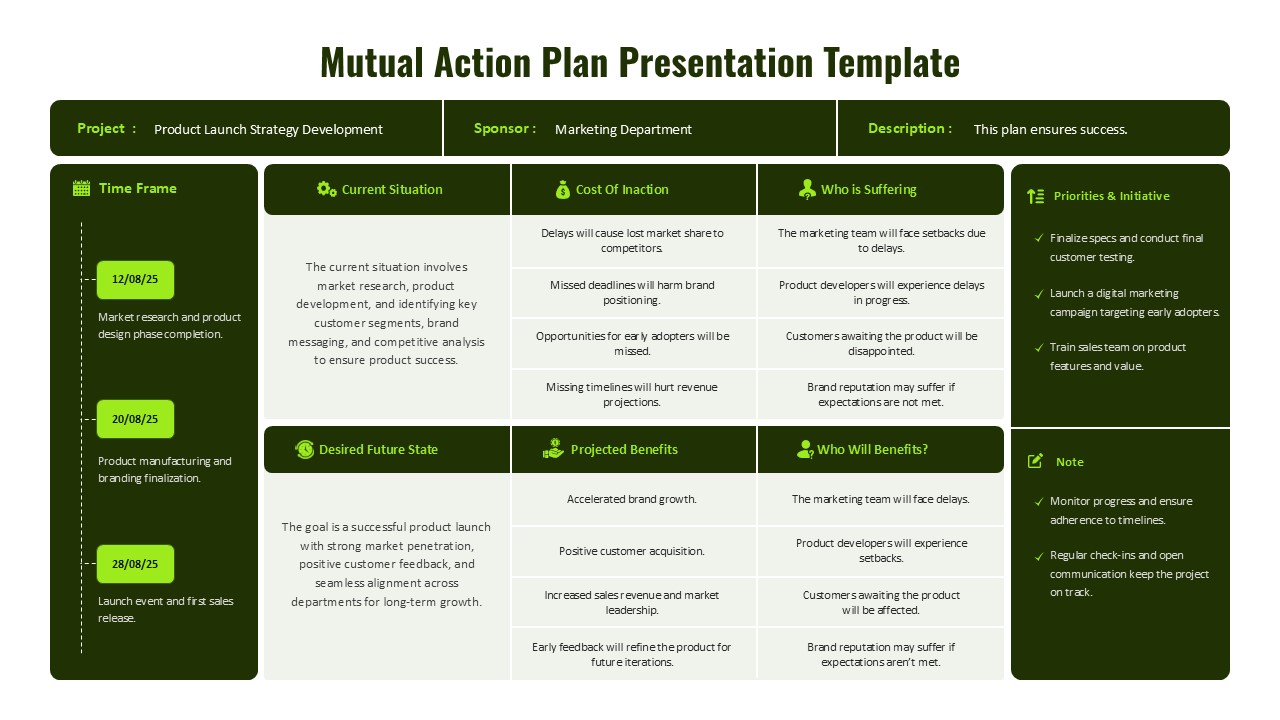
Mutual Action Plan Framework Presentation Template
Project
Action Priority Matrix Template
Business Strategy
Action Plan Smart Goals Template for PowerPoint
Goals
Leadership Action Plan Presentation Template
Leadership
30 60 90 Plan of Action Infographics
Timeline