


SCARF Model PowerPoint Template
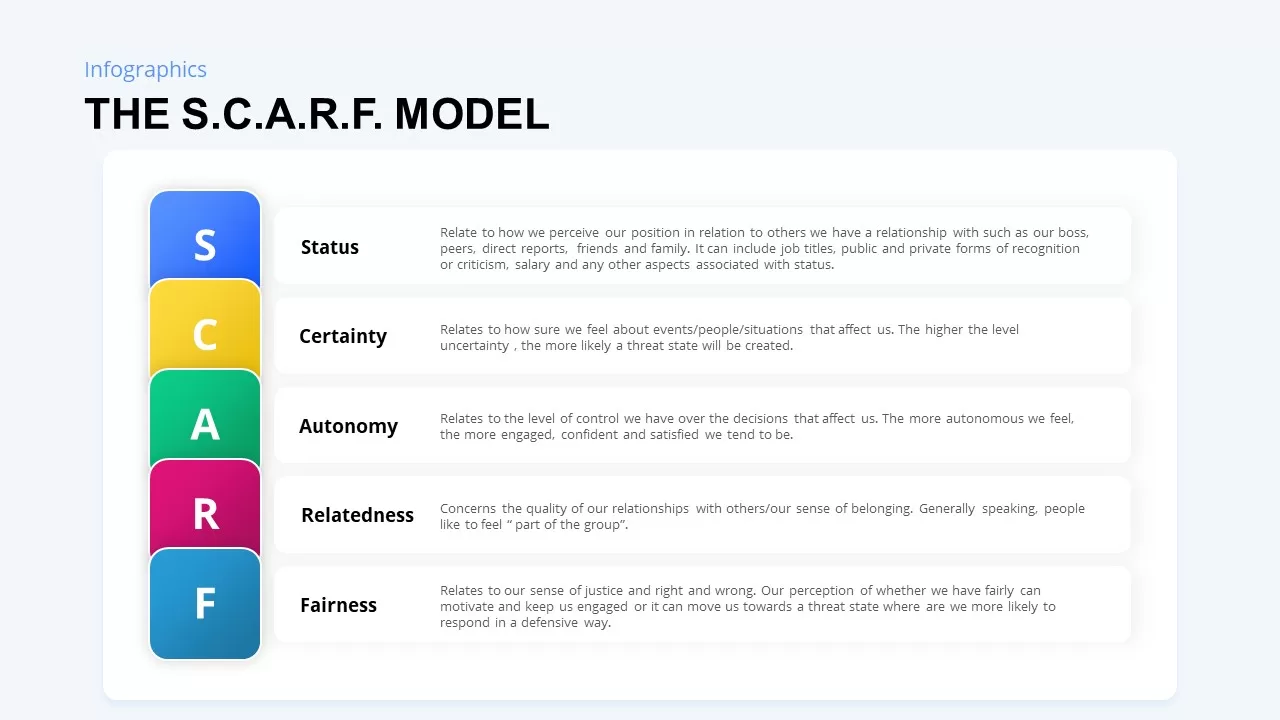
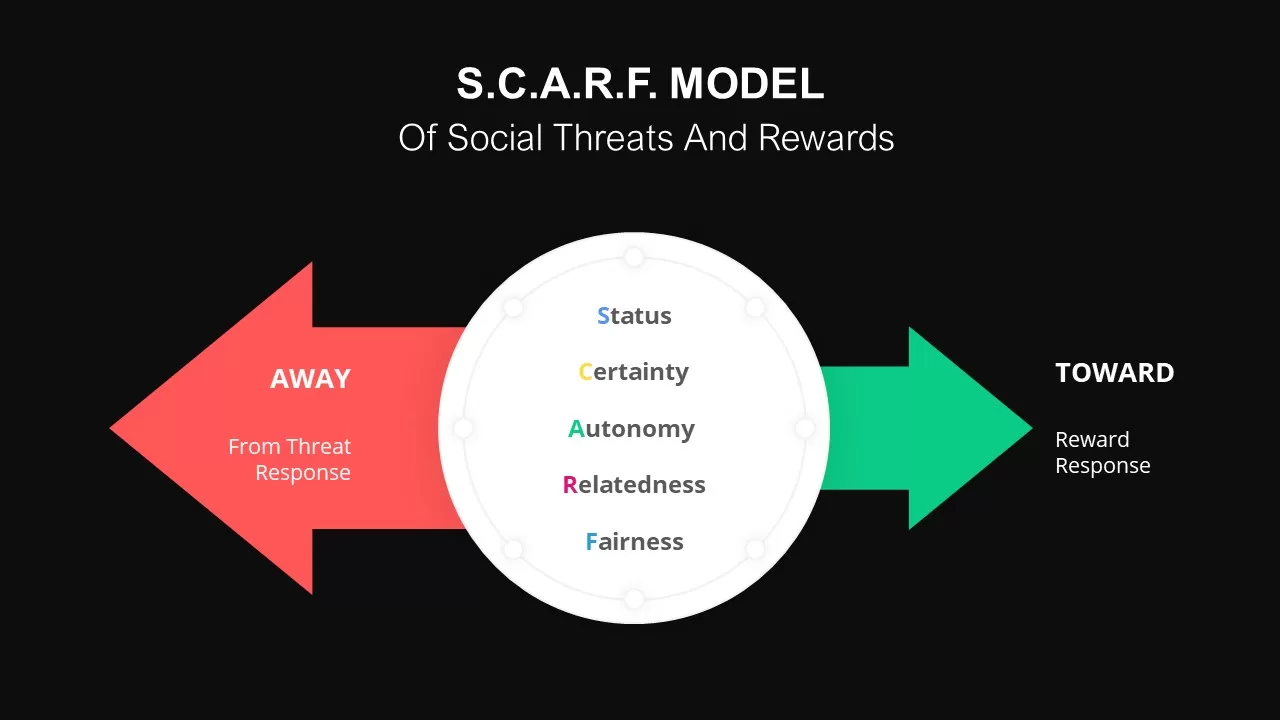
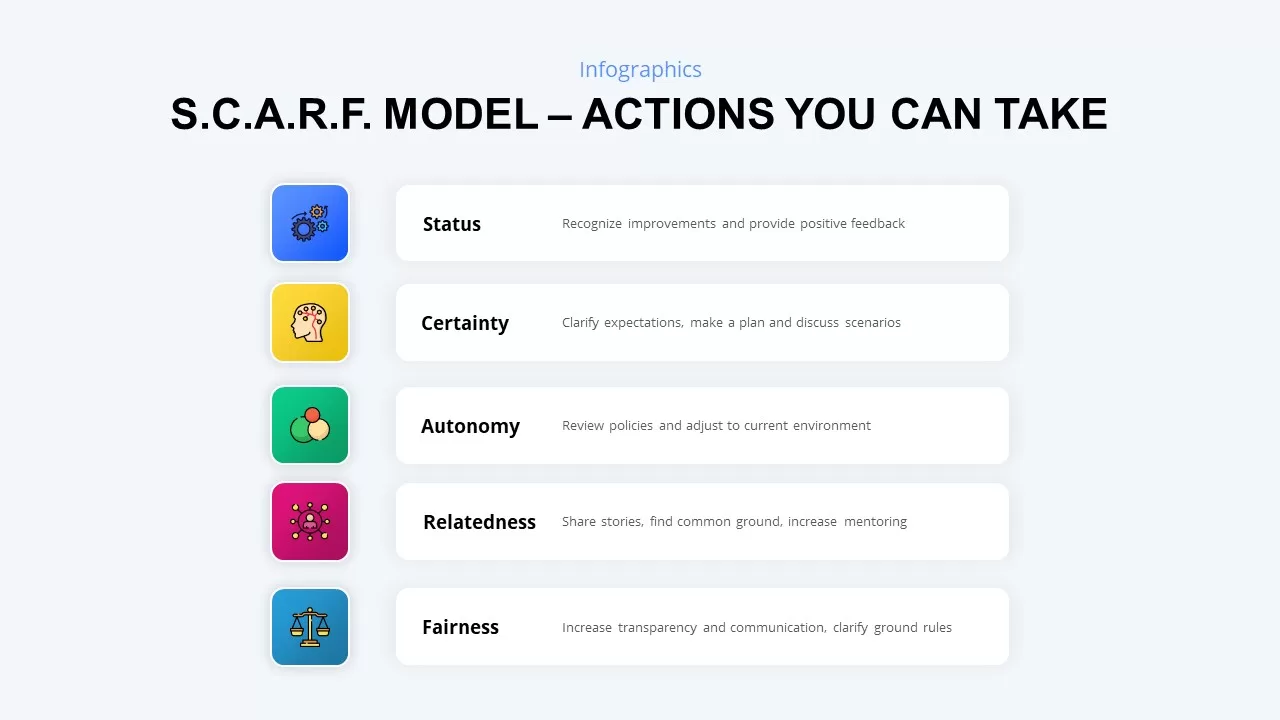
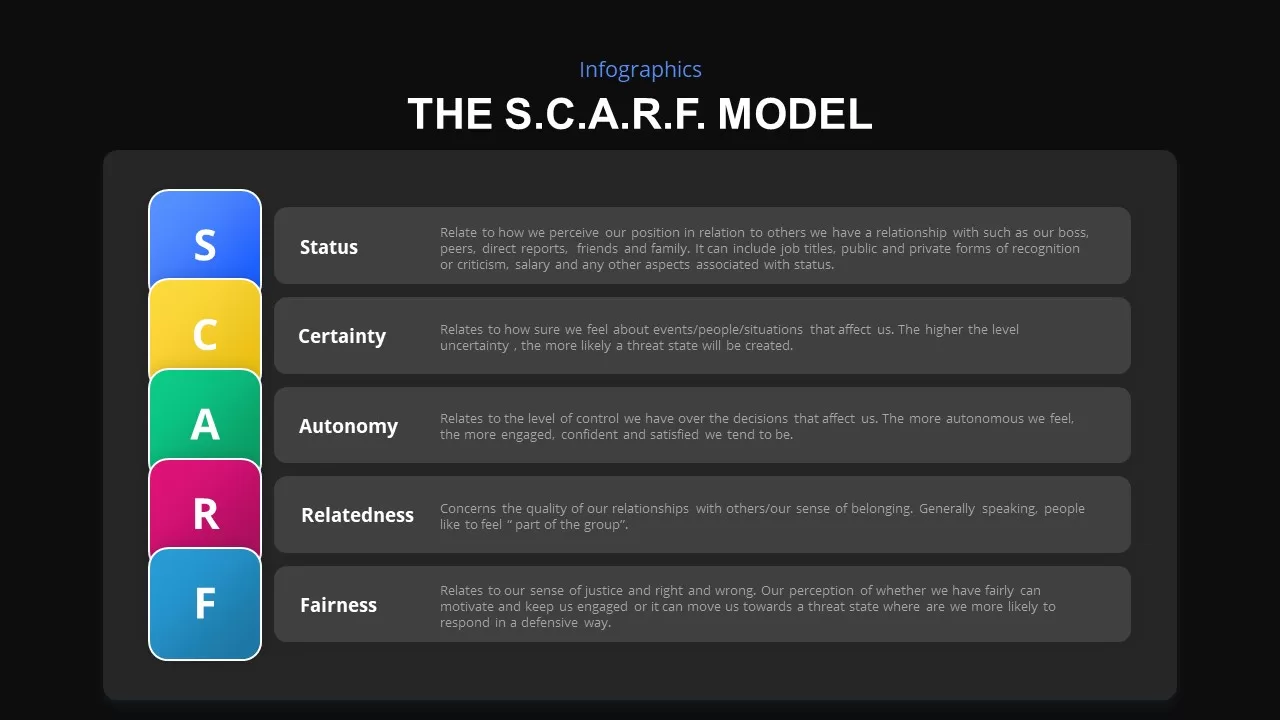
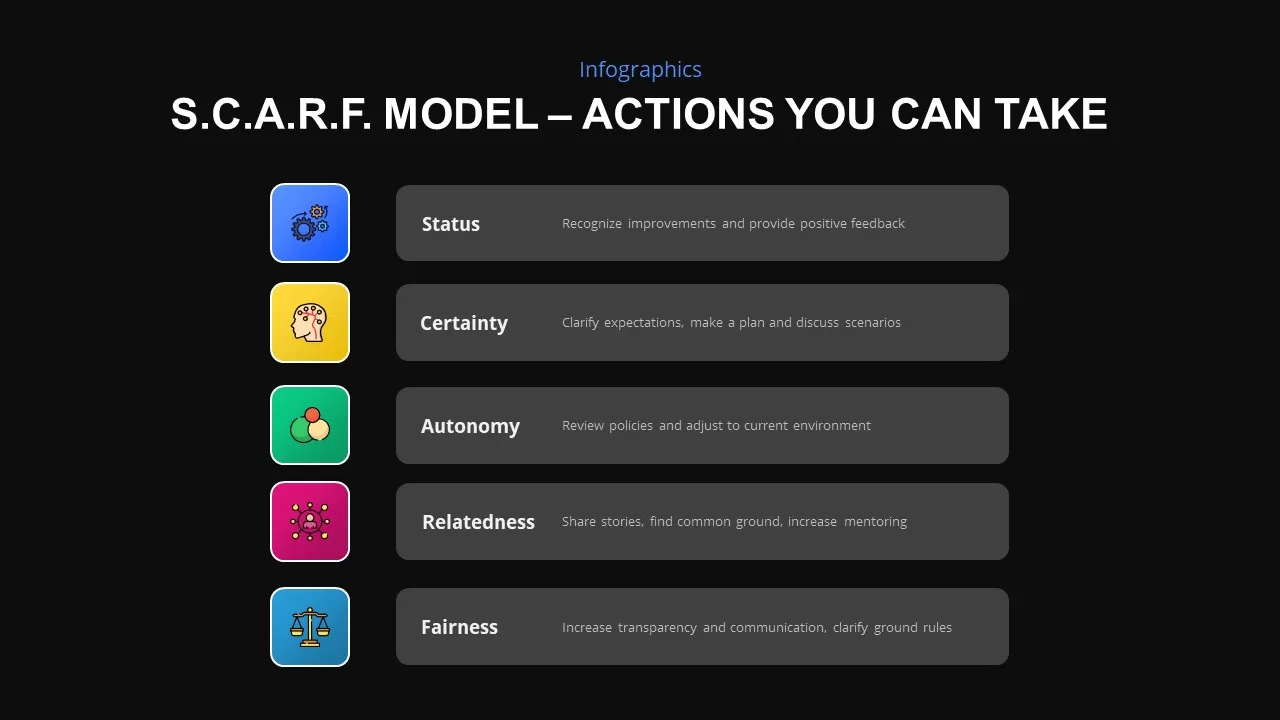
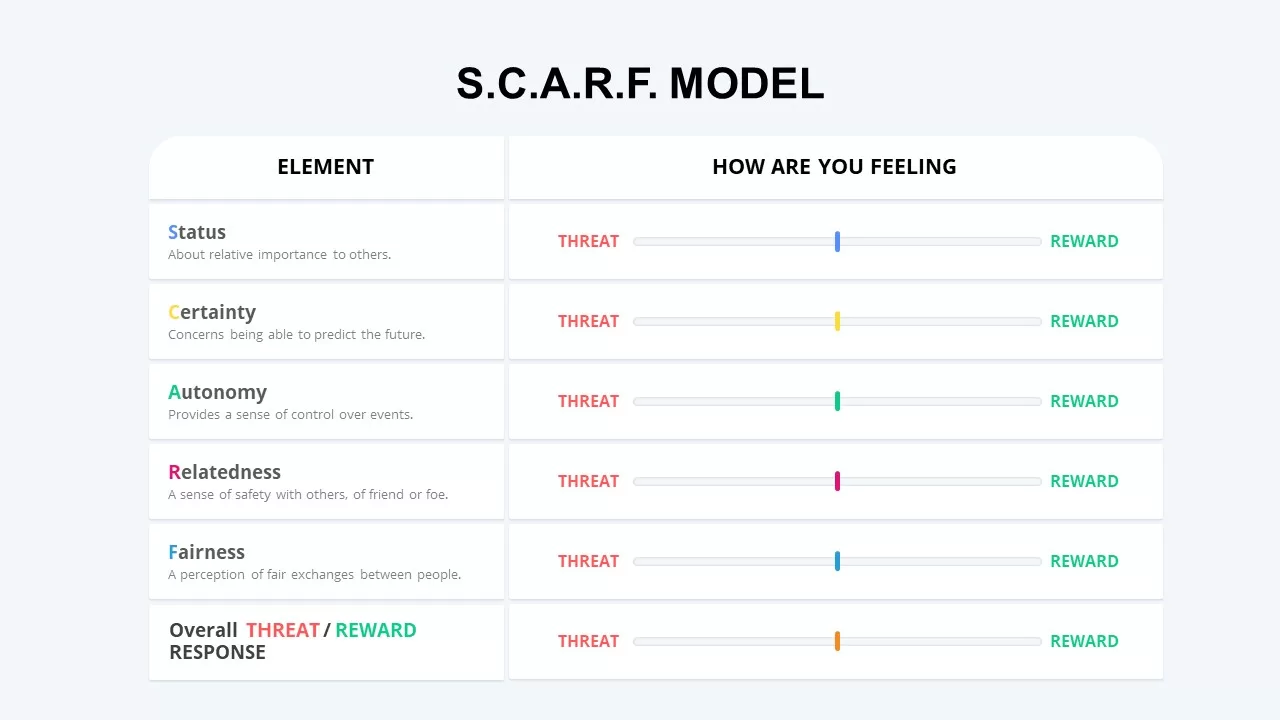
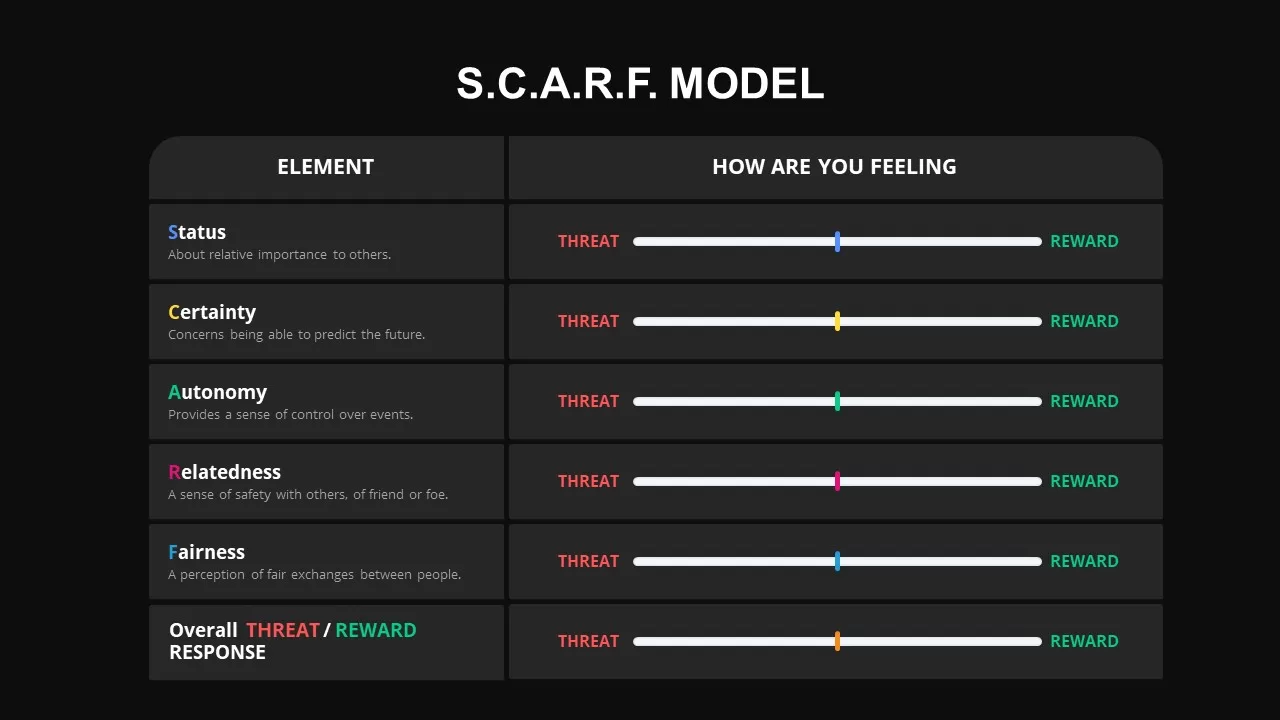
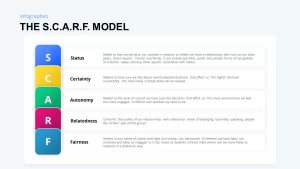
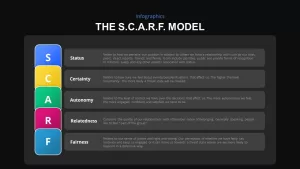
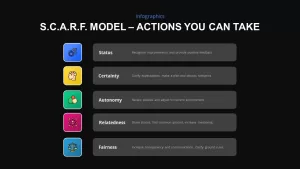
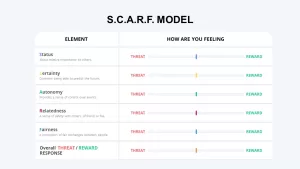
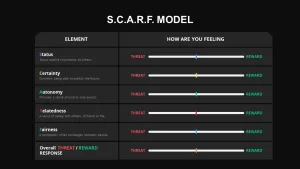
SCARF model template is a Brain-based tool that helps to collaborate and influencing close relatives and employees. This is a psycho-social model behavior analysis of oneself that aid in transforming behavior to the desired end. When interacting with individuals or staff, managers can adopt the SCARF model to tame their unfamiliar attitude of others and thereby control the situation without make damages. The SCARF model was developed by David Rock in 2008. It helps leaders to influence people in social situations. The fundamental principles of the SCARF model include:
- Minimizing threats and maximizing rewards by motivation drives
- How does the brain function to fulfill social needs?
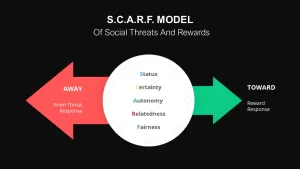
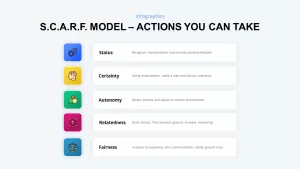
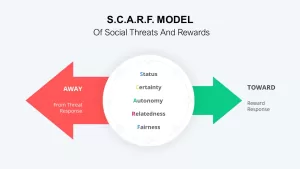
The five elements of the SCARF model contribute to reward and threat response in social situations. These are;
- Status- our position creates relative importance to others
- Certainty-ability to predict future
- Autonomy-sense of control over the situation
- Relatedness- a sense of safety
- Fairness-how fair we perceive the exchanges of others
SCARF model analysis is based on neuroscience research that involves five social domains that trigger the same threat and reward responses in our brain that we depend on for physical survival. The SCARF model PowerPoint template is professional creations that design without losing the prime ingredients of the analytical tool. Project leaders and company managers can use the SCARF model tool to teach the theoretical perspectives and their implications to life. Being professionals, every leader can use this brain model to influencing and collaborating with their subordinates.
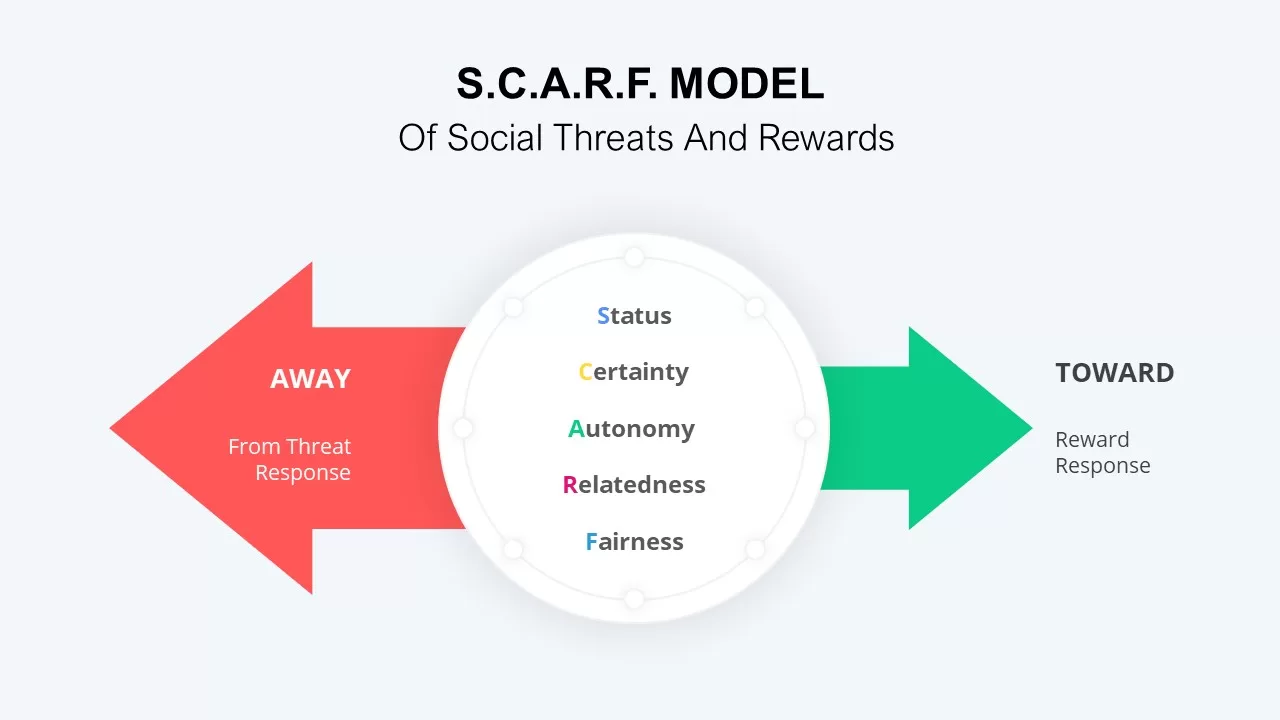
SCARF model template has eight modern graphical slides containing enough text placeholders and detailed sections to deliver important elements. The toward and away arrow diagram PowerPoint is symbolically showcasing threat response and reward response as the basic ideal of the SCARF model. This is also used to produce any presentation of up to five elements. The generic style design for PowerPoint presentations allows the user to change the size, shape, and structure of the diagram without hurting images and resolution.
Login to download this file

Item ID
SB02013


Related Templates

KSAO Model PowerPoint Template for PowerPoint & Google Slides
Business Strategy
SAMR Model PowerPoint Template for PowerPoint & Google Slides
Business
Kotter’s 8 Step Change Model Template for PowerPoint & Keynote
Business Models
Business Critical Success Factor Model PowerPoint Template
Infographics
SOAR Model Template for PowerPoint Presentation
Process
Run Grow Transform Model Infographic Template for PowerPoint & Google Slides
Business
Star Model Galbraith Framework Template for PowerPoint & Google Slides
Business Strategy
RADPAC Model of Negotiation template for PowerPoint & Google Slides
Competitor Analysis
OGSM Model Template for PowerPoint & Google Slides
Competitor Analysis
Capability Maturity Model Infographic Template for PowerPoint & Google Slides
Software Development
Data Governance Maturity Model PowerPoint Template
Process
Katzenbach & Smith Model Pyramid Template for PowerPoint & Google Slides
Pyramid
ARCS Model PowerPoint Template and Google Slides
Process
Closed Innovation Model Funnel Diagram Template for PowerPoint & Google Slides
Funnel
Spotify Model Organizational Structure template for PowerPoint & Google Slides
Business Strategy
Spiral Model Software Development Template for PowerPoint & Google Slides
Process
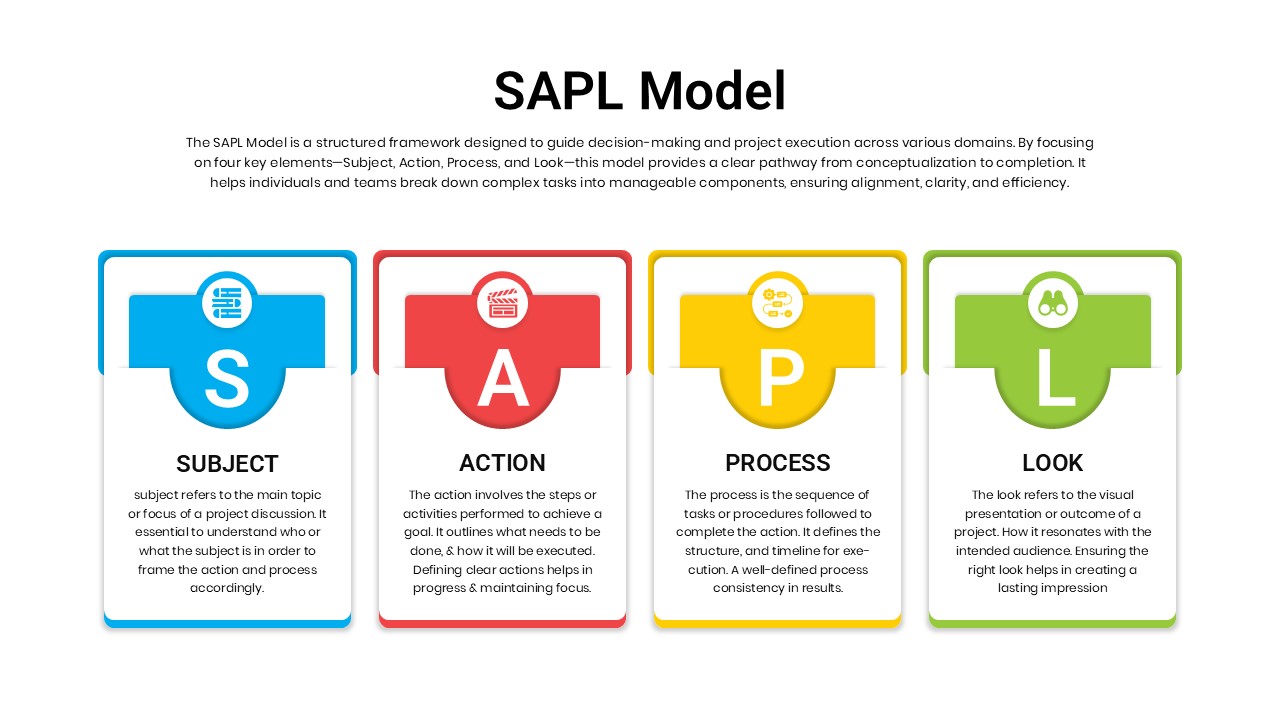
SAPL Model Framework template for PowerPoint & Google Slides
Business
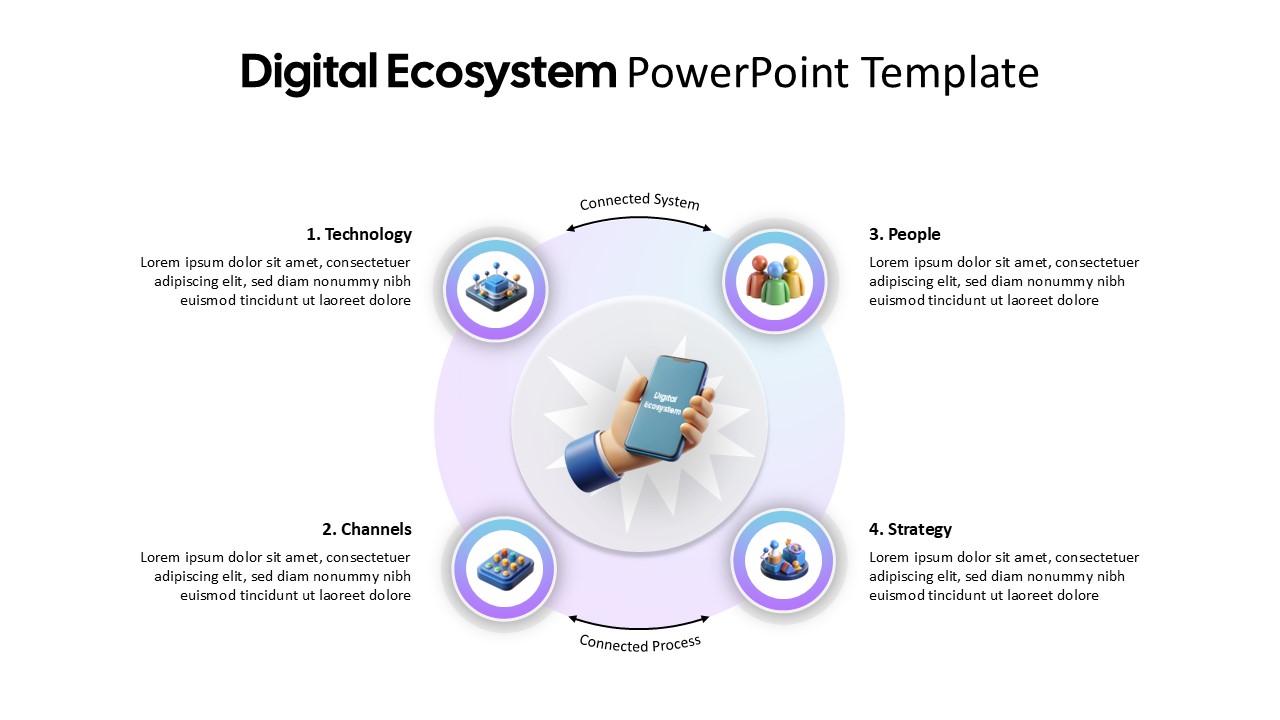
Digital Ecosystem Circular Model Template for PowerPoint & Google Slides
Information Technology
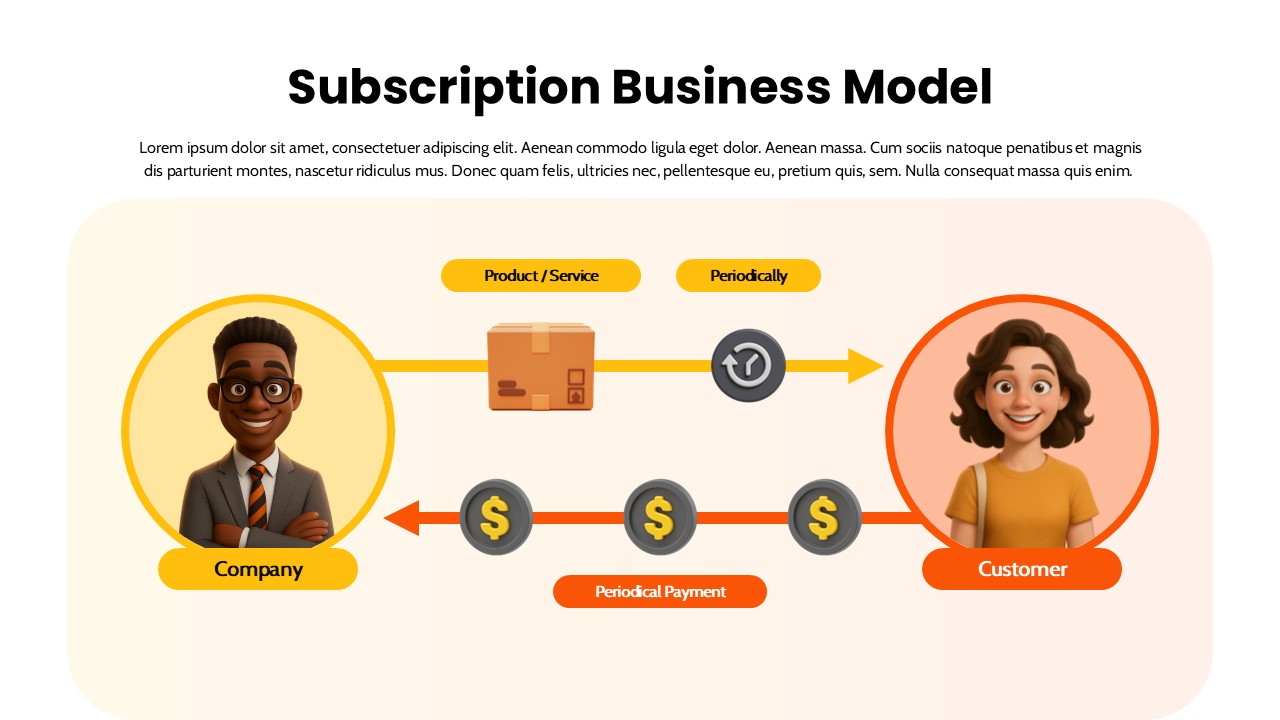
Subscription Business Model Flow Diagram Template for PowerPoint & Google Slides
Business Models
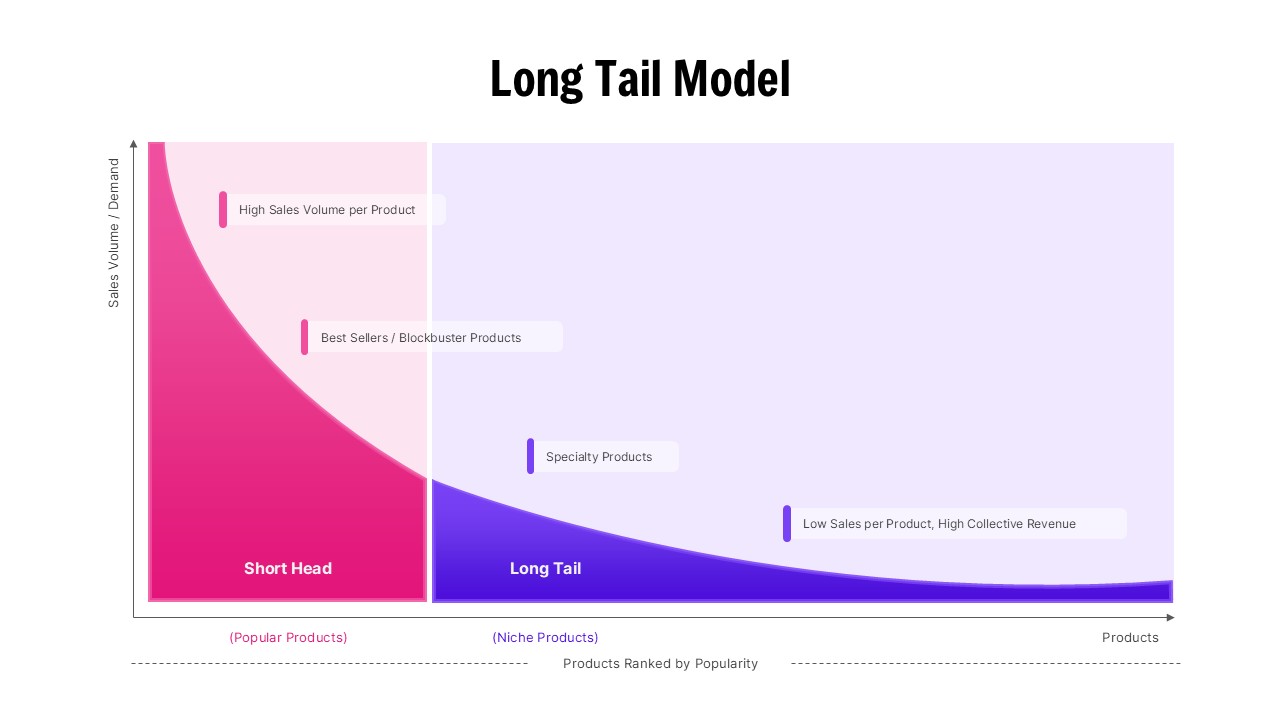
Long Tail Model Business Strategy Diagram Template for PowerPoint & Google Slides
Business