




















Pyramid of Pain Template for PowerPoint
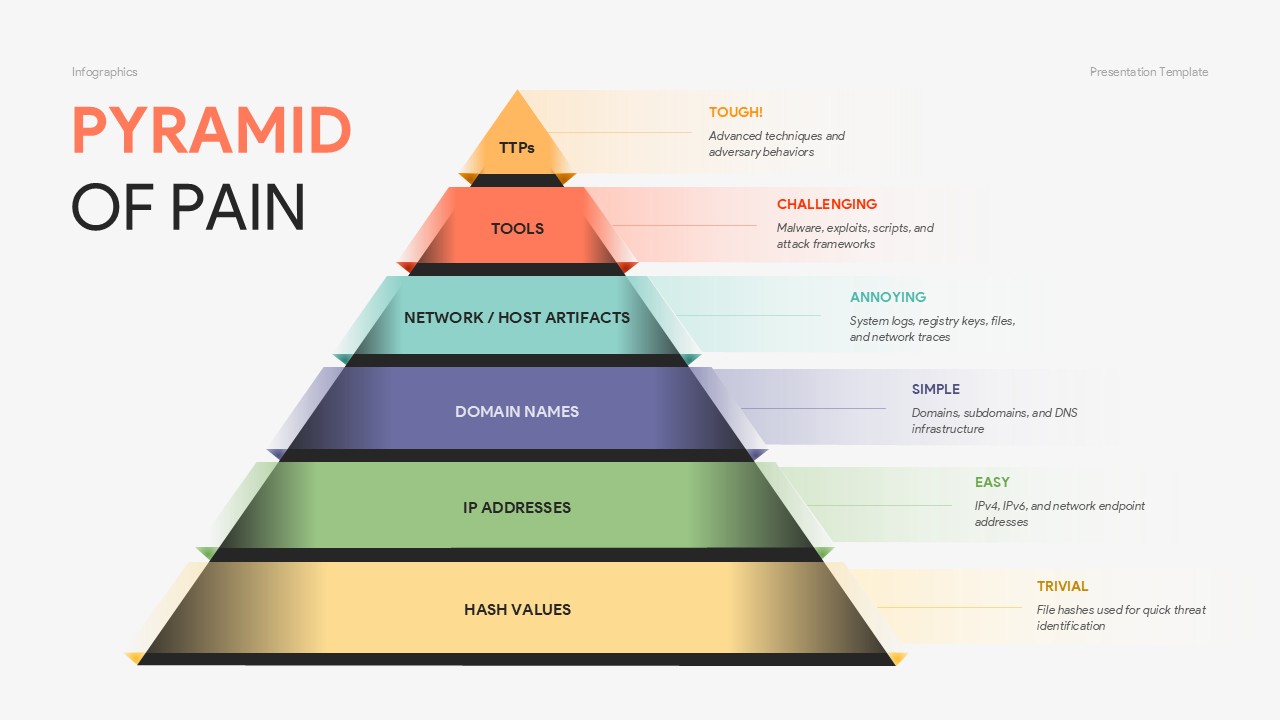
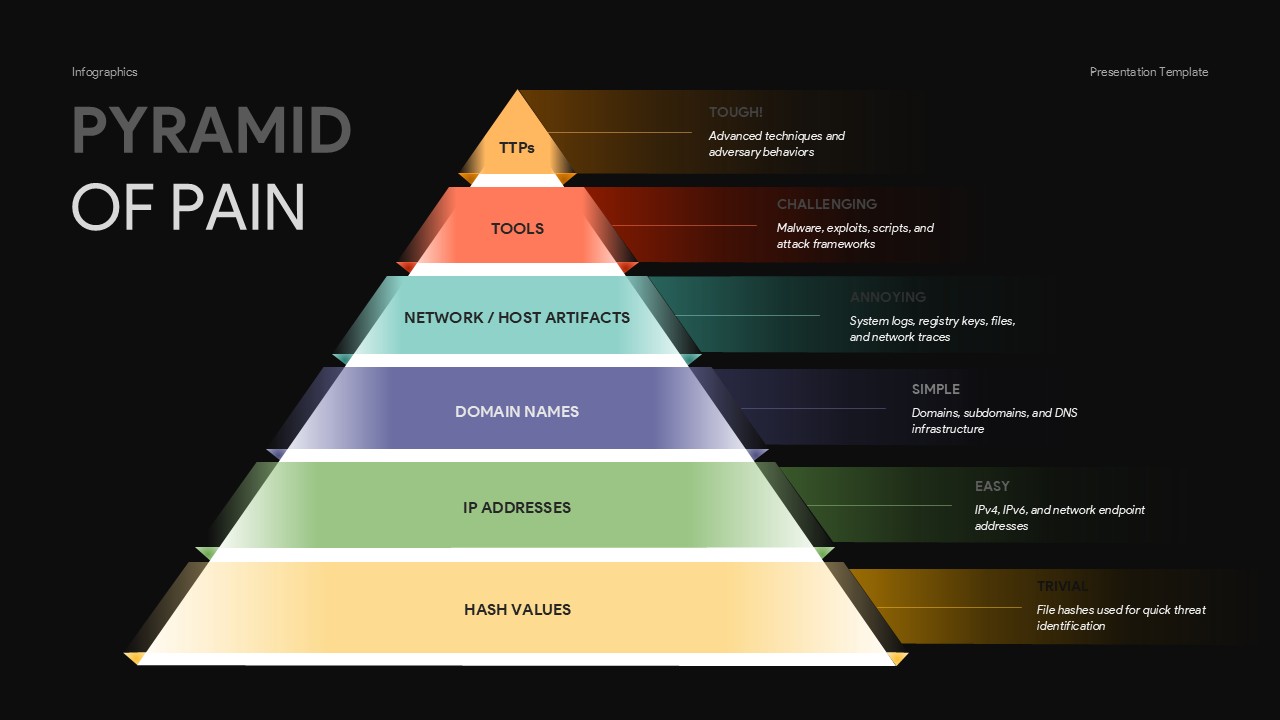
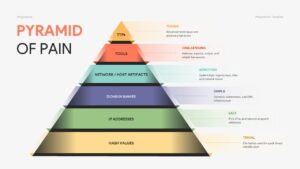
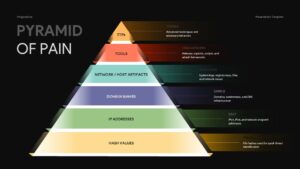
The Pyramid of Pain offers a practical way to explain how different threat intelligence indicators affect an attacker’s ability to continue operating. Technical artifacts such as hashes and IP addresses can often be changed with relatively little effort, while higher level indicators such as tools and tactics, techniques, and procedures (TTPs) demand greater changes to an attacker’s methods. The Pyramid of Pain PowerPoint Template presents the framework through a six level pyramid, combining clear labels, descriptions, and difficulty indicators in one visual hierarchy. The layout is well suited for cybersecurity briefings, SOC training, threat intelligence presentations, incident response meetings, security awareness programs, and technical education. As an editable PPT template, it allows you to replace sample content, add security examples, modify colors, and tailor the hierarchy to your own use case.
The PowerPoint presentation organizes the Pyramid of Pain into a structured visual that makes the relationship between indicators and attacker disruption easier to explain. Each level represents a different category of threat intelligence, progressing from easily modified technical indicators toward behavioral intelligence that can be more difficult for attackers to change. The focused infographic style works well for security analysts, IT professionals, cyber risk teams, consultants, trainers, educators, and students presenting complex cybersecurity concepts to technical or non technical audiences.
Who Can Use This PowerPoint Template?
This Pyramid of Pain PowerPoint Template can be used by threat intelligence analysts, SOC professionals, incident response teams, cybersecurity consultants, IT security managers, educators, trainers, and students. It is also useful for security leaders who need to introduce threat intelligence concepts and explain how different indicators can influence defensive strategies.
Why Use a Pyramid of Pain Presentation?
The Pyramid of Pain provides a visual method for comparing threat indicators based on the effort required for an attacker to change them. By arranging these indicators from lower effort artifacts to higher effort behavioral intelligence, this PowerPoint template helps audiences understand why some detection approaches can create greater disruption than others. The presentation can be added to cybersecurity training decks, threat intelligence reports, SOC briefings, incident response sessions, security awareness presentations, and academic coursework.
- Six level Pyramid of Pain infographic covering hashes, IP addresses, domain names, network or host artifacts, tools, and TTPs.
- Attacker effort hierarchy visually communicates the increasing difficulty associated with changing different types of threat indicators.
- Editable PowerPoint content allows users to modify headings, descriptions, colors, labels, and supporting information.
- Light and dark versions provide presentation options for different deck styles, environments, and audience settings.
- Cybersecurity themed visual structure provides a focused format for threat intelligence, detection, and security operations topics.
- Adaptable PPT template works for training sessions, consulting decks, technical reports, classroom lessons, and security briefings.
- Supporting information sections provide room for examples, defensive actions, observations, threat findings, and case specific details.
Frequently Asked Questions
Does this template work in both PowerPoint and Google Slides?
Can I edit the pyramid labels and tier descriptions?
Login to download this file

Item ID
SB06099Designed By
Athira


Related Templates

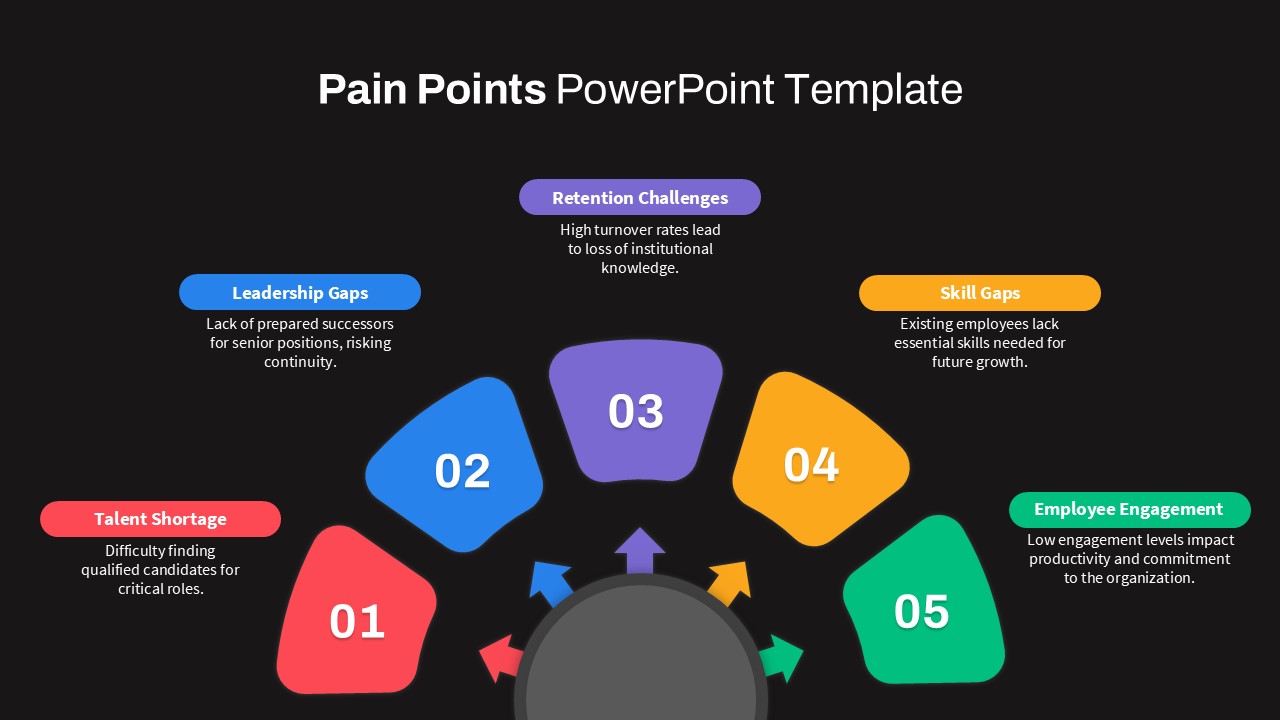
Pain Points PowerPoint Template
Circular
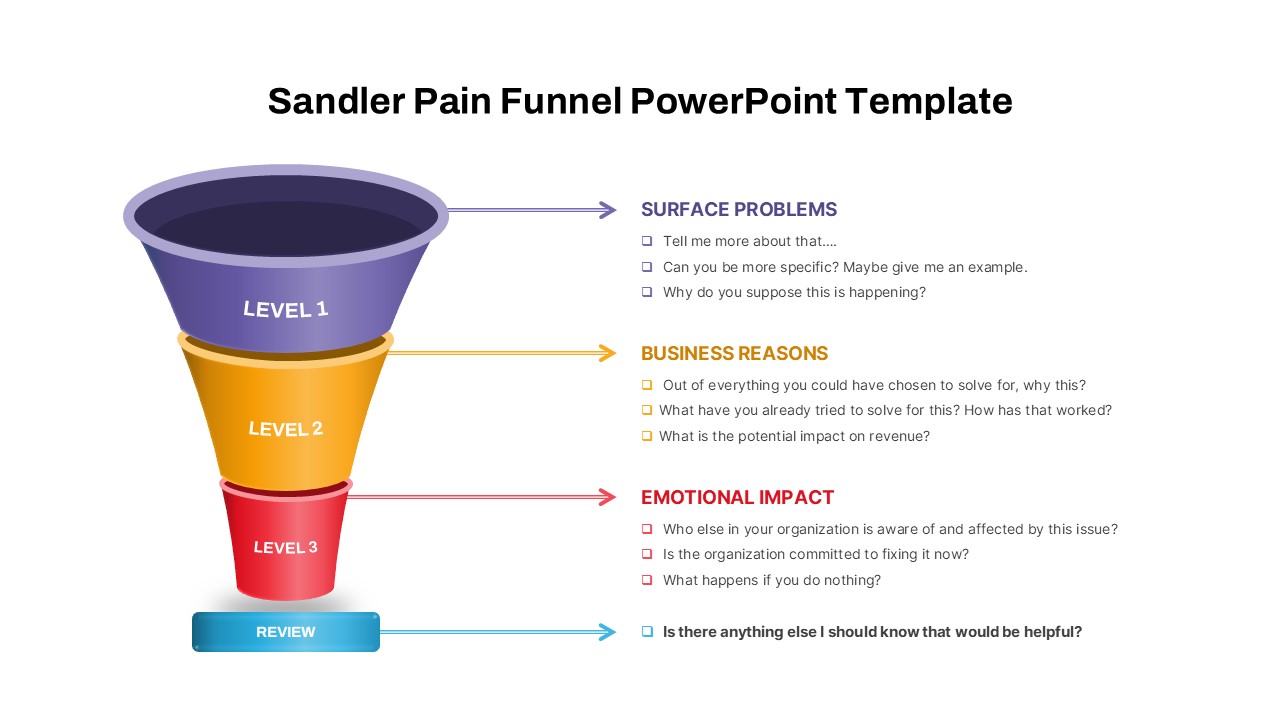
Sandler Pain Funnel PowerPoint Template
Funnel
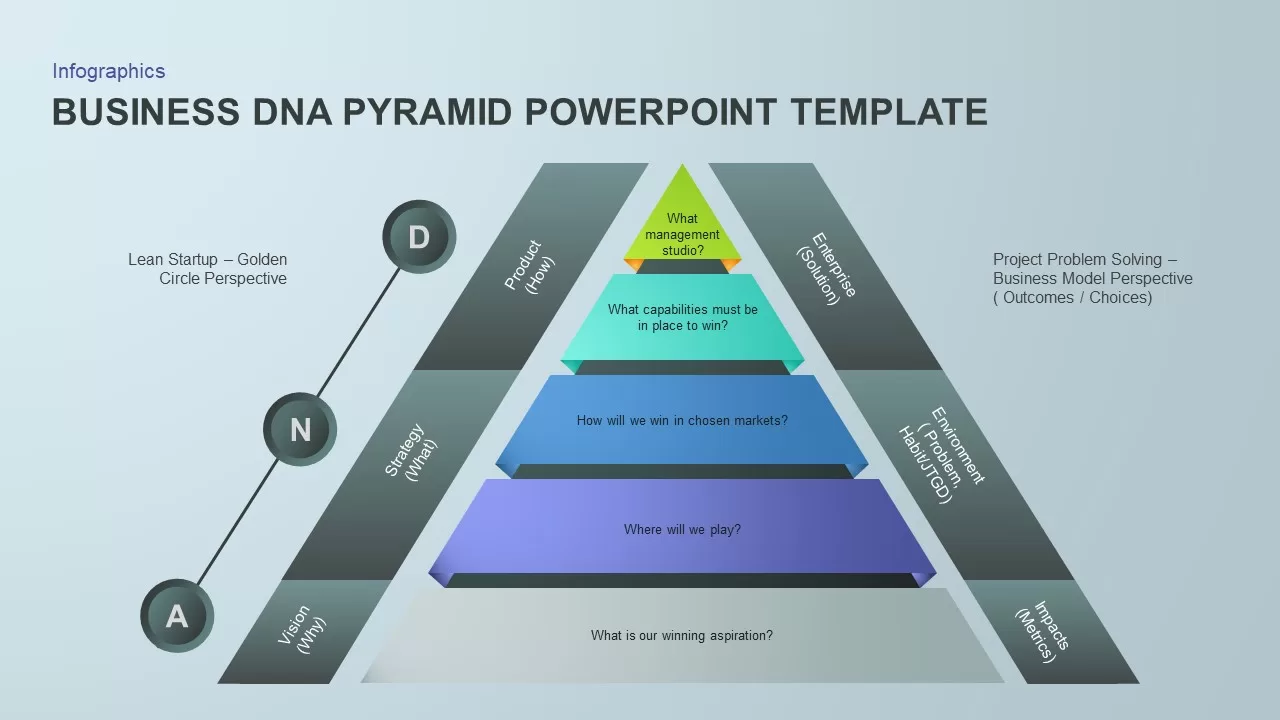
Business DNA Pyramid PowerPoint Template for PowerPoint & Google Slides
Pyramid
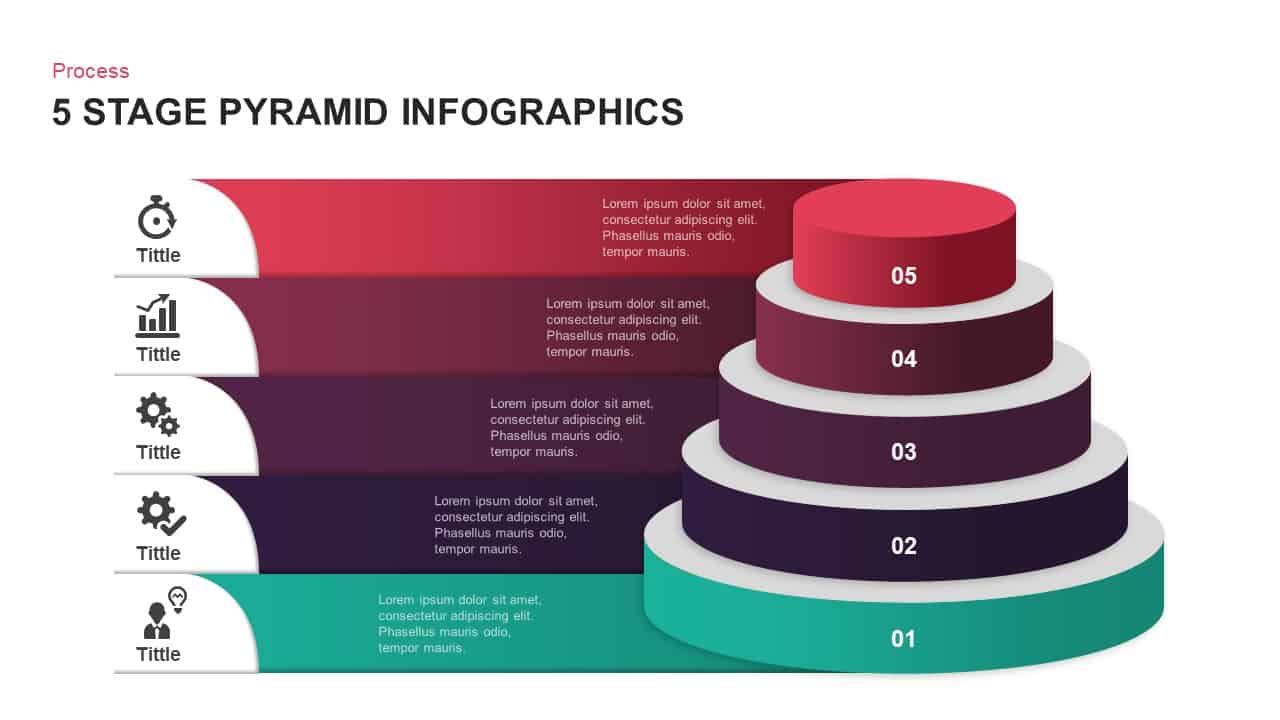
5 Stage Infographics Pyramid Diagram Template for PowerPoint Template
Pyramid
Level Pyramid Infographics Template
Pyramid
7 Level Pyramid Template for PowerPoint
Pyramid
Segmented Pyramid Diagram Template for PowerPoint and Google Slides
Pyramid
6 Levels 3d Pyramid PowerPoint Template
Pyramid

Pyramid Area Chart Template for PowerPoint
Pyramid

4 Stage Pyramid Diagram Template for PowerPoint
Pyramid
Stacked Cubes Pyramid PowerPoint Template
Pyramid
3D Pyramid Infographic Template for PowerPoint
Pyramid
Brand Pyramid PowerPoint Template
Pyramid
DIKW Data to Wisdom Pyramid Model Template for PowerPoint & Google Slides
Pyramid
3D Pyramid Slide PowerPoint Template
Pyramid
Vision Pyramid PowerPoint Template
Pyramid
Donor Pyramid PowerPoint Template
Pyramid
Population Pyramid Chart PowerPoint Template
Pyramid
Lencioni Trust Pyramid Diagram Template for PowerPoint & Google Slides
Pyramid
Business Value Pyramid PowerPoint Presentation Template
Pyramid