



























Expectancy Theory Of Motivation

Description
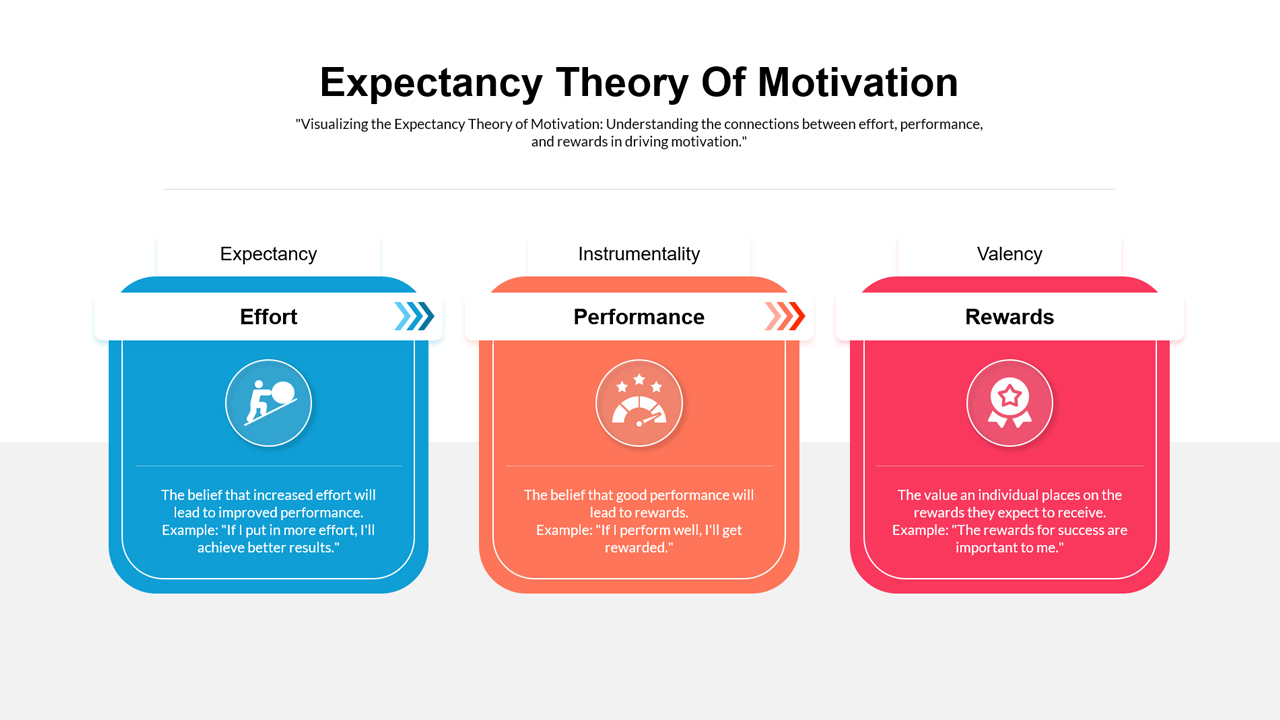
Explain the Expectancy Theory of Motivation with clarity using this structured three-column diagram slide for PowerPoint and Google Slides. The layout visually breaks down the core components—Expectancy, Instrumentality, and Valency—into clearly separated yet connected sections. Each column is presented as a rounded card with bold headings, directional arrows, and supporting icons, guiding viewers through the logical flow from effort to performance and finally to rewards. The clean typography and balanced spacing ensure that theoretical concepts remain easy to follow, even for non-technical audiences.
Designed for effective communication, this slide uses color-coded panels to distinguish each concept while maintaining a cohesive visual narrative. Editable text areas allow you to replace definitions, examples, or explanations to suit academic, corporate, or training contexts. The modern flat design with subtle depth enhances engagement without distracting from the message, making it ideal for presentations where conceptual understanding is the priority. Fully compatible with PowerPoint and Google Slides, the slide retains formatting integrity across devices and screen sizes.
Who is it for
This template is ideal for educators, HR professionals, trainers, and management consultants explaining motivation theories. Business leaders, team managers, and MBA students can also use it to illustrate how effort, performance, and rewards influence employee motivation in organizational settings.
Other Uses
Beyond expectancy theory, repurpose this slide to explain cause-and-effect models, behavioral frameworks, performance management concepts, or incentive structures. It also works well for workshops, leadership training sessions, onboarding programs, and academic lectures focused on organizational behavior or psychology.
Login to download this file